


Author: Amanda Ahne
Daily Comment (January 17, 2025)
by Patrick Fearon-Hernandez, CFA, and Thomas Wash
[Posted: 9:30 AM ET] | PDF
Note: Due to the holiday, the Daily Comment will not be published on Monday, January 20.
Good morning! The market is currently digesting the latest economic data. In sports news, Manchester City striker Erling Haaland has signed a 10-year contract to stay with his current club. Today’s Comment will cover our key takeaways from the Senate confirmation hearing of Trump’s Treasury secretary nominee, explore why Fed officials are divided on whether to proceed with rate cuts, and discuss other market-moving events. As usual, the report will also include a summary of both domestic and international data releases.
Bessent Speaks: Treasury Secretary nominee Scott Bessent successfully navigated his confirmation hearing, offering the first insights into the priorities of President-elect Donald Trump’s administration. During his testimony, he addressed key issues including the federal deficit, Federal Reserve independence, tariffs, and Russian sanctions.
- Government Spending: Bessent stressed that extending the 2017 Trump tax cuts is essential to preventing another economic crisis. However, he also underscored the importance of tackling the growing deficit, suggesting that reductions in discretionary spending is a key area for budget cuts. Additionally, he expressed support for eliminating the US debt ceiling altogether.
- Federal Reserve: He also emphasized his respect for the central bank’s independence in making monetary policy free from White House influence. Additionally, he expressed confidence that the Trump administration’s tax policies could boost real wages without significantly driving up inflation.
- US Trade Tariffs: He has expressed support for the president-elect’s ideas, which include utilizing import duties to increase government revenue. This support extends to both blanket tariffs and those specifically designed to address unfair trade practices from other countries, as well as to influence geopolitical matters. Furthermore, he indicated an openness to exploring the possibility of implementing carbon-based tariffs.
- Russian Sanctions: Bessent proposed that the US could implement stricter sanctions on Russian oil to hasten the end of the conflict in Ukraine. He also suggested that increasing domestic oil production to lower prices could undermine Russia’s war efforts in Ukraine.
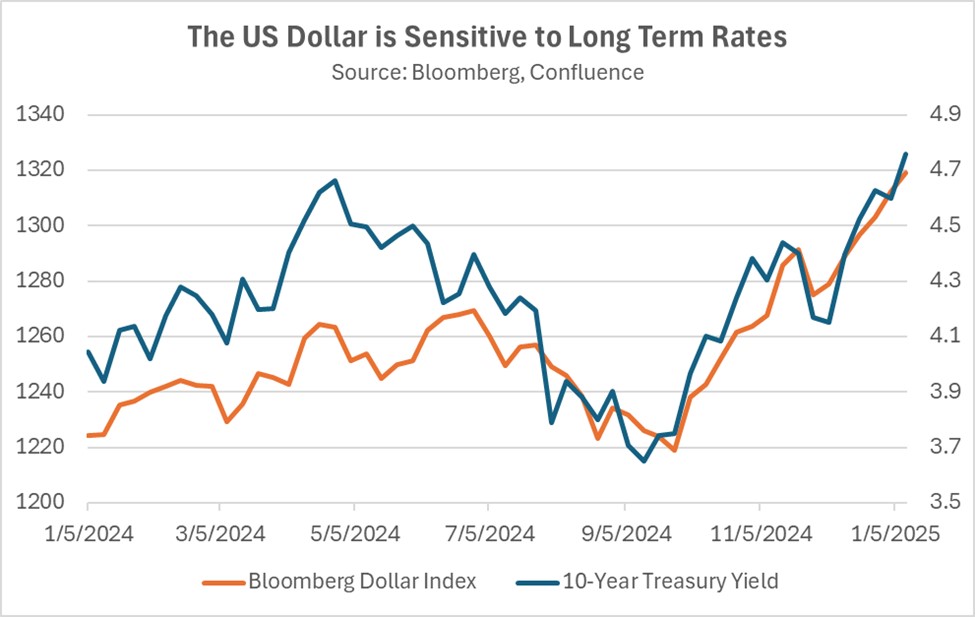
- Our key takeaway from the hearing is that Trump’s policies should be bullish for the US dollar and supportive of US equities. However, the market’s overall performance will largely depend on the incoming president’s ability to address concerns about rising inflation and the increasing of US government bond yields.
Central Bank Discord: While the Federal Reserve demonstrated remarkable unanimity during the rate-hiking cycle, a lack of internal cohesion is now evident as they contemplate easing monetary policy. This disunity has contributed to the recent rise in 10-year Treasury yields over the last few weeks.
- On Thursday, Federal Reserve Governor Christopher Waller expressed optimism that the central bank could implement multiple interest rate cuts this year, potentially beginning in the first half, provided that inflation continues to demonstrate substantial progress. However, he emphasized that the Federal Reserve does not feel compelled to initiate rate cuts prematurely.
- In contrast, Cleveland Fed President Beth Hammack, a non-voting member this year, maintains that inflation is still a significant concern. She argues that not only are current price levels elevated, but the rate of price increases remains problematic and is a challenge the central bank must actively confront. These remarks follow her dissenting vote against the Federal Reserve’s interest rate cut at the December FOMC meeting.
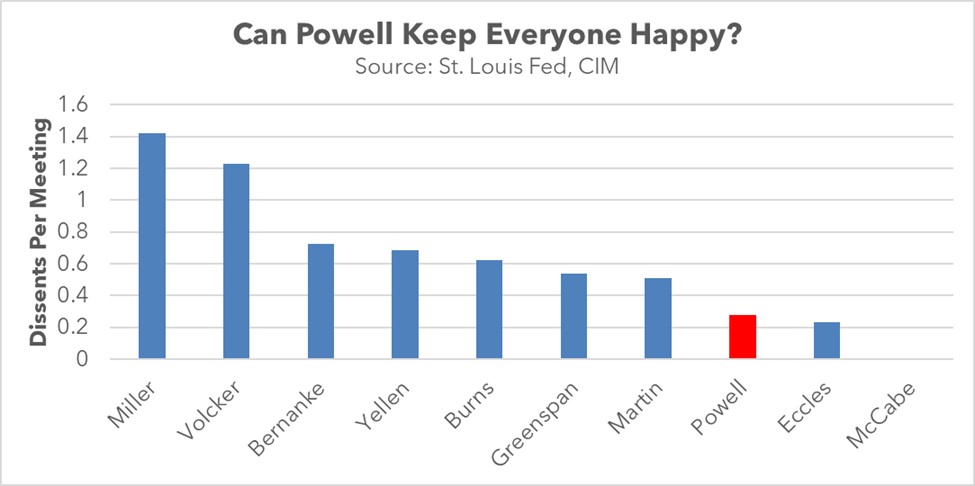
- The diverging views are likely to make it more challenging for Fed Chair Powell to align the Fed officials and maintain a unified stance as they work to manage market expectations through forward guidance. During his tenure in office, Powell has near-record low number of dissents per meeting, with only Marriner S. Eccles and Thomas Bayard McCabe having fewer.
- Additionally, President-elect Trump may be influencing the Federal Reserve’s hesitancy to ease monetary policy. Some Fed officials appear to believe — justified or not — that his policies could contribute to inflationary pressures. A few weeks ago, Richmond Fed President Thomas Barkin and Fed Governor Adriana Kugler noted that the incoming administration’s policies have complicated efforts to forecast the trajectory of inflation and the economy.
- Assuming continued progress in taming inflation towards the 2% target, we anticipate that the implementation of the incoming president’s economic policies, which may prove less radical than his campaign rhetoric, could embolden Federal Reserve officials to demonstrate greater openness to easing monetary policy.
German Elections Focus on Ukraine: Chancellor Scholz has faced criticism for his reluctance to provide additional military aid to Ukraine. German Foreign Minister Annalena Baerbock, a member of the Green Party, accused Scholz of withholding approval for 3 billion EUR ($3.08 billion) in support for Ukraine to secure “a few votes.” This remark highlights the significant impact the war is expected to have on Germany’s upcoming elections on February 23.
- Support for Ukraine is emerging as a significant point of contention within Germany, Europe’s largest economy. Public opinion on the government’s role in aiding Ukraine remains nuanced and somewhat contradictory. While a recent poll indicates that 57% of Germans favor continued financial and humanitarian assistance, another survey reveals that over 60% oppose the provision of more advanced military equipment to Ukraine, such as the Taurus cruise missile.
- A significant factor contributing to this divide is the prevalent fear that Germany could be drawn into a direct war with Russia. This anxiety is particularly acute among residents of former East Germany, with a poll indicating that 76% of respondents in that region fear a potential conflict, compared to only 44% in the western part of the country.
- The divide over support for the war has already sparked a pushback in local elections, with the populist parties Alternative for Germany (AfD) and the Sahra Wagenknecht Alliance (BSW) finding success by campaigning to end funding for Ukraine. The AfD, in particular, has seen its polling improve recently. The rise of populist parties within the German government could complicate efforts to sustain current levels of financial and military aid to Ukraine.
- The outcome of the German election will likely have significant repercussions for the continuation of support for Ukraine. Reduced funding from key Western allies, including Germany and the United States, would likely hinder Ukraine’s ability to continue its war effort against Russia. Any potential resolution to the conflict, regardless of its terms, would likely exert downward pressure on global oil prices.
Crypto National Priority: President-elect Donald Trump is expected to issue an executive order to promote the increased adaptation of cryptocurrency. This order would facilitate collaboration between government agencies and industry stakeholders to develop a more comprehensive regulatory framework. Key provisions include the establishment of a dedicated crypto advisory board to provide guidance and insights on policy development.
TikTok Ban: The Supreme Court is expected to rule on whether the government has the authority to ban or force the sale of the social media platform later today. President Biden has stated that if the court moves forward with this decision, he will leave it to his successor to determine the next steps.
Daily Comment (January 16, 2025)
by Patrick Fearon-Hernandez, CFA, and Thomas Wash
[Posted: 9:30 AM ET] | PDF
Good morning! The market is processing the latest development in the Israel-Hamas conflict. In sports news, three MLS teams are reportedly in discussions to sign Brazilian football star Neymar. Today’s Comment will share our thoughts on President Biden’s farewell address to the nation, analyze the latest inflation data, and discuss other market-moving stories. As always, our report will include a summary of international and domestic data releases.
Biden’s Parting Shots: The outgoing president took aim at the rising power of Silicon Valley in his final address to the nation. During his speech, he warned that the “tech industrial complex” has become increasingly powerful and has used misinformation and lies to enable the abuse of power. He also expressed concern about the rise of AI. His comments are a reminder of the growing wariness the public is experiencing with large tech companies.
- Both during Biden’s term and Trump’s first term, assertive approaches were adopted to curb Big Tech’s power. However, this time feels different, as tech firms appear to have widely embraced Trump’s return to the White House with open arms and seem to have turned their backs on the Democratic Party.
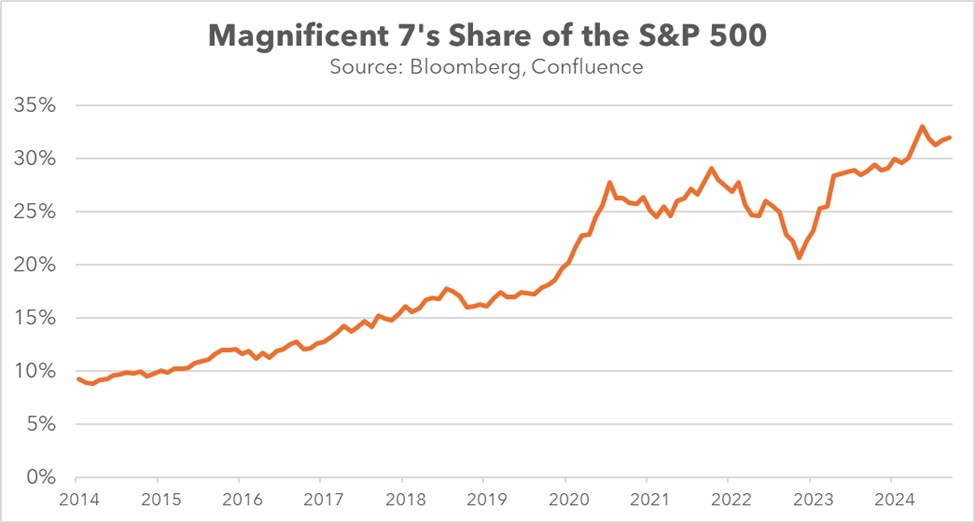
- Most of the Magnificent 7 companies donated to President-elect Trump’s inauguration, probably in an effort to curry favor with the incoming administration. These companies likely hope that staying in the president’s good graces will lead to leniency, as several are under investigation for antitrust violations and many rely on a disproportionate share of the revenue from countries that are likely to be targets of tariffs.
- However, it remains unclear how the tech industry’s newfound MAGA stance will resonate with the populist wing of Trump’s coalition. For instance, there have already been murmurs of discontent regarding the industry’s heavy reliance on H-1B visas, which some see as a means to sidestep domestic hiring. Additionally, concerns are growing over Elon Musk’s increasing influence, as many within the coalition view him as lacking genuine alignment with Trump’s vision for the country.
- President-elect Trump has, thus far, managed to navigate between the two sides, striving to keep both camps satisfied. While he has acknowledged that the program may negatively impact American workers, he has also concluded that it serves a purpose. We expect that this balancing act will continue throughout his term in office as he looks to ensure that Republicans maintain a fundraising advantage over Democrats going into future election cycles.
- Biden’s speech highlights how the tech industry is increasingly viewed as an adversary by the Democratic Party, making it a likely target for political attacks. Meanwhile, right-wing populists’ distrust of the industry adds another challenge. This suggests that the regulatory environment for Big Tech companies may not improve significantly as Trump may be reluctant to invest the political capital needed to shield them from backlash. However, an alliance with him could prevent potential breakups of the firms.
Rate Cut Hopes Get a Boost: The latest December inflation report has boosted investor confidence that the central bank will proceed with planned interest rate cuts this year. Investors now expect the bank to lower rates twice, up from last week’s prediction of just once, according to the CME FedWatch Tool. Following the report, the S&P 500 stock market index rose nearly 2%.
- Headline inflation increased 0.4% month-over-month on a seasonally adjusted basis, marginally exceeding market forecasts of 0.3%. Core inflation, excluding volatile food and energy prices, rose 0.2% month-over-month, falling short of the anticipated 0.3% increase.
- The optimism in the CPI was due to signs that underlying price pressures are finally beginning to stabilize. Shelter price inflation held steady at 0.3%, medical services eased from 0.4% to 0.2%, and recreation services eased from 0.3% to 0.1%.
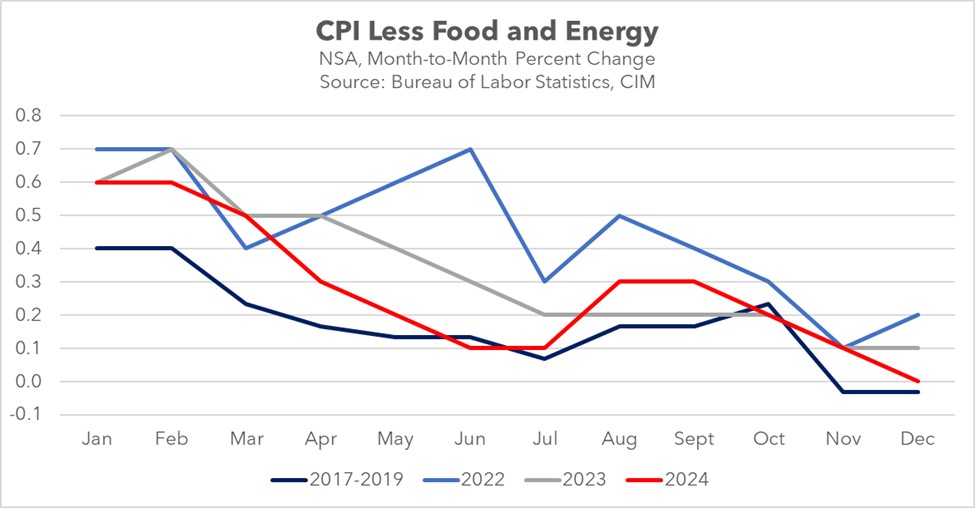
- December’s inflation data provides further evidence that the Federal Reserve is making consistent progress in curbing price pressures. Notably, the CPI increased above the previous year’s pace in only two out of the 12 months of the year, strongly reinforcing the central bank’s progress towards its 2% inflation target.
- It’s also important to remember that inflation usually reaches its highest point in the first three months of the year. This is normal. However, the central bank will be watching closely to see if the month-to-month increase in prices slows down to its usual level. If it does, the bank might be more willing to lower interest rates significantly this year, if other factors remain the same.
Gaza Ceasefire: Israel and Hamas have agreed to pause the conflict after 15 months of fighting, despite ongoing tensions. The deal, announced on Wednesday, has received approval from both President-elect Trump and outgoing President Biden. While the agreement has been widely welcomed, concerns about its stability exist. Following the agreement, the Tel Aviv Stock Exchange rose to a record high.
- Hours after the agreement was announced, Israeli Prime Minister Benjamin Netanyahu accused Hamas of violating the deal. He criticized Hamas for opposing Israel’s veto over which Palestinian prisoners would be released in exchange for hostages following the 2023 attacks. Netanyahu warned that his cabinet would not approve the deal unless Hamas agreed to all of the terms outlined in the agreement.
- So far, the deal appears to be holding. The arrangement begins on Sunday with a 42-day ceasefire, which will lead to the Israeli military’s withdrawing from several regions in Gaza, as well as the delivery of aid to the Gaza Strip. The goal of the agreement is to secure the release of all hostages and effect a complete withdrawal of Israel from the region.
Canada Tit-for-Tat: Although Canada has stated its intention to comply with the US decision to shore up border security to mitigate rising trade tensions, it has also warned of potential retaliatory measures, such as tariffs, if its interests are significantly impacted.
- Ottawa announced potential retaliatory measures, including tariffs on steel and orange juice, if the US imposes tariffs on Canadian goods. While these measures are unlikely to impact the US economy significantly, they would directly target states like Michigan and Florida, with the former being a key swing state in national elections.
- The warning comes as the country braces for federal elections, set to take place before October 20, 2025. Lawmakers are working to strengthen their populist credentials, aiming to demonstrate to citizens that they will prioritize their needs.
- While we do not expect the US and Canada to engage in a trade war, tensions between the allies are elevated.
Daily Comment (January 15, 2025)
by Patrick Fearon-Hernandez, CFA, and Thomas Wash
[Posted: 9:30 AM ET] | PDF
Good morning! Markets are closely analyzing the latest CPI inflation data as they assess the Federal Reserve’s next steps. In sports, more than 100 Olympic athletes from the Paris games have returned their medals due to unexpected deterioration. Today’s Comment will explore Trump’s proposal to establish a new agency to monitor tariff revenue, the potential impact of new export curbs on chipmakers, and other significant developments. As always, we’ll conclude with a summary of key international and domestic data releases.
External Revenue Service: President-elect Donald Trump announced plans to establish a new government agency dedicated to collecting revenue from import tariffs and taxes on foreign services on his first day in office. This move will likely solidify fears that the incoming president intends to implement wide-scale tariffs, a policy that has made both bond and equity investors wary.
- While US Customs and Border Protection traditionally handles the collection of foreign duties and tariffs, the creation of this new office signals the president’s intention to leverage tariffs as a significant revenue source. This move is likely aimed at reassuring the public that his proposed tax cuts will not substantially increase the national budget deficit.
- His reliance on tariff revenue to address the deficit comes as his administration seeks to deliver on key promises to extend the Trump tax cuts, raise the SALT deduction cap from $10,000 to $20,000, lower corporate tax rates, and, if possible, implement additional tax cuts aimed at benefiting working-class households.
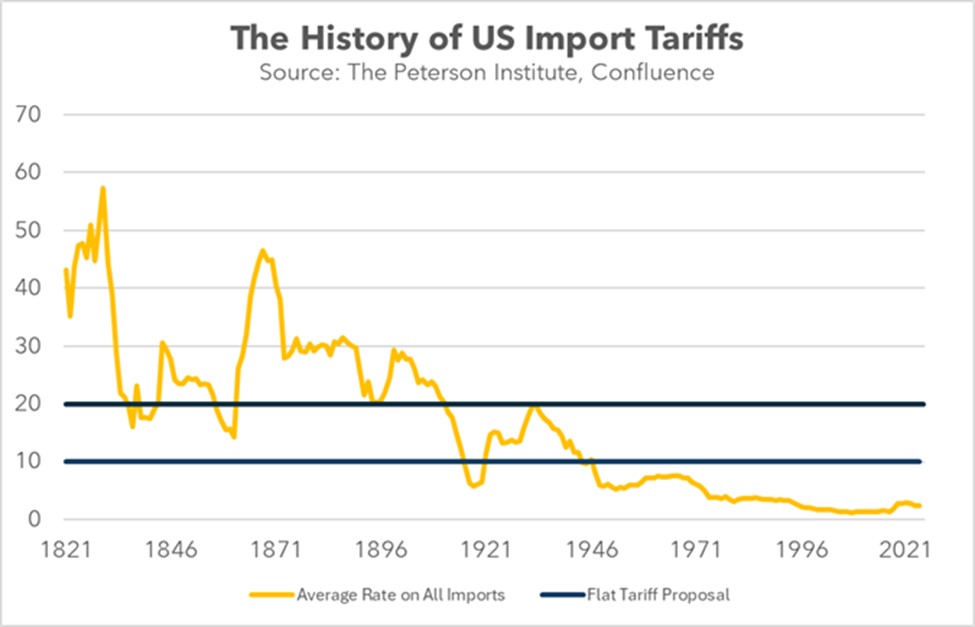
- Trump intends to impose a blanket tariff of 10 to 20% on all imports, with additional tariffs of 60 to 100% on goods originating from China. This would significantly increase the average tariff rate to its highest level in nearly six decades.
- Tariffs were a primary source of US government revenue in the 1800s, a time when the government was significantly smaller. Today, taxes on international trade contribute just 1.7% of government revenue, down from a recent peak of 2.1% over the past decade but well short of what would be needed to fund government spending. As a result, the president must either cut spending or rely on Americans continuing to purchase imported goods despite the tariffs.
- While we anticipate the president may impose tariffs, we are skeptical they will be as extensively applied as the market expects. Trump may need to scale back some of his proposals to make them more budget-friendly to increase their chances of becoming law.
Chipmakers Under Pressure: President Biden is expected to release new regulations aimed at preventing chipmakers from selling advanced chips to China. These moves are likely to further complicate the operating environment for semiconductor firms as they strive to maintain strong earnings amidst a growingly complex economic and geopolitical landscape.
- The new rules will place restrictions on all chips with a node size of 16 nanometers or smaller under a global regulatory framework. Those that meet the criteria will need an export license to sell to China and other countries deemed as posing a national security threat.
- The regulations will include provisions for companies to challenge these restrictions. This may involve demonstrating that their chip designs comply with the established criteria for permissible sales or providing evidence that their chips contain fewer than 30 billion transistors and are packaged by a trusted manufacturer.
- The companies targeted by the restrictions, Taiwan Semiconductor Manufacturing Co. (TSMC), Samsung Electronics, and Intel Corp., will likely be negatively impacted by the order. Intel receives nearly 27% of its revenue from China, while Samsung derives nearly a fifth of its chip revenue from the region. Ironically, TSMC has the lowest exposure of the three at 12.5%.
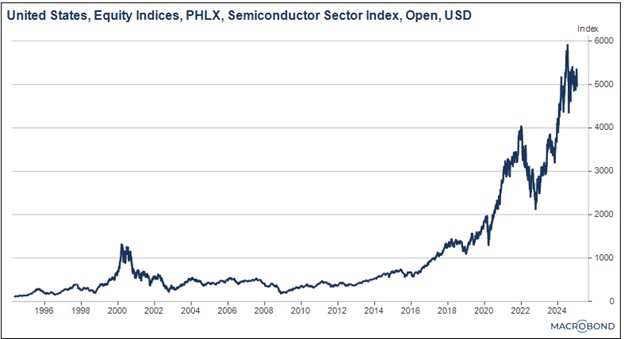
- Despite a robust 2024 with nearly 30% growth, the semiconductor sector has failed to surpass its July peak, indicating a potential slowdown. This weakness stems from growing concerns about a global economic recession, the looming threat of a global trade war, and the tightening of chip export restrictions. Consequently, the future performance of this sector hinges heavily on the policy decisions of the incoming administration.
Argentine Inflation: President Javier Milei intends to decelerate the monthly devaluation rate of the Argentine peso (ARS). He has implemented stringent currency and capital controls as a strategy to mitigate rapid currency depreciation and, consequently, curb inflationary pressures.
- Milei’s unorthodox approach has effectively reduced month-over-month inflation from a peak of 26% in December 2023 to 2.7% twelve months later. This significant progress is likely to encourage investors to take another look at the country as it appears to be on the path to economic sustainability.
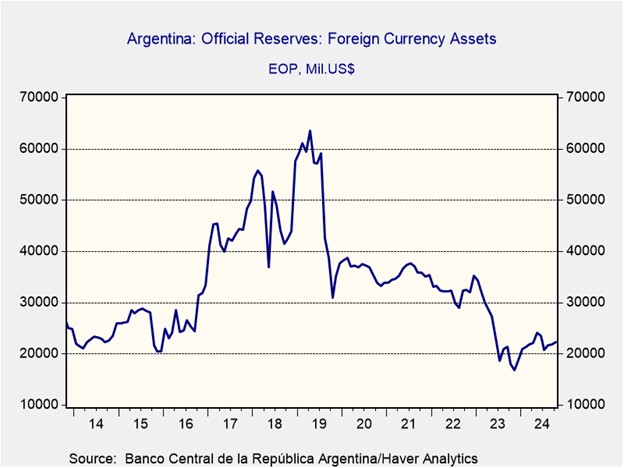
- A crucial next step for the country will be for the central bank to rebuild its foreign currency reserves. This will serve as a key indicator of the long-term effectiveness of the implemented policies.
President In Custody: South Korean President Yoon Suk Yeol was arrested on Tuesday after repeatedly refusing to cooperate with an investigation into his decision to impose martial law last month. His arrest has eased concerns, as the peaceful nature of his detainment has alleviated fears of an escalating constitutional crisis. In response, the Korean won (KRW) strengthened by 0.2% against the dollar.
OPEC Optimism: The OPEC+ cartel is anticipating increased crude oil demand from India and China by 2026, suggesting a potential openness to lifting production cuts. Although the group’s next meeting is not scheduled until February 3, a growing sense of optimism regarding global economic recovery is emerging among its members. The potential for increased oil supply is likely to exert downward pressure on oil prices.
French Pension Plan: The country’s new prime minister, François Bayrou, has proposed “renegotiating” the controversial pension reform introduced by Emmanuel Macron, which raised the retirement age from 62 to 64. This offer appears to be an olive branch to leftists as he seeks support for passing the budget; however, he has maintained that any changes should not hurt the country’s public finances.
Daily Comment (January 14, 2025)
by Patrick Fearon-Hernandez, CFA, and Thomas Wash
[Posted: 9:30 AM ET] | PDF
Our Comment today opens with news that Israel and Hamas could be on the verge of a cease-fire deal that could help stabilize the Middle East and reduce the risk of disruption in the global energy market. We next review several other international and US developments with the potential to affect the financial markets today, including new trade tensions between the European Union and China and more signs that investors are turning to data centers as a key way to capitalize on the development of artificial intelligence.
Israel-Hamas Conflict: Negotiators from Israel and the militant Hamas government of Gaza are meeting today in Doha, Qatar, to finalize a cease-fire deal that would end Tel Aviv’s attacks on the enclave and release some of the hostages held by Hamas. Officials from Qatar say the deal could be signed and announced as early as today. If signed and implemented, the deal could help stabilize the Middle East and ease concerns about the global energy market.
China-Taiwan: Western defense analysts have discovered that Chinese shipyards are building at least three large, unusual barges with the ability to extend road bridges from their bows. The ships are suspected of being prepared for an eventual Chinese invasion of Taiwan, despite many observers’ expectations that China would more likely impose a naval blockade to force Taiwan into unification with the mainland. Of course, either scenario would likely touch off a security crisis that could draw in the US and the rest of its geopolitical bloc.
European Union-China: The European Commission today said its months-long probe into the Chinese government’s procurement practices found that they discriminate against EU medical devices. The finding sets the stage for EU-China negotiations on changing the practices, but if no agreement is reached, then Brussels could impose retaliatory trade barriers against Beijing. The finding shows how the EU has increasingly aligned with US-style moves to counter China’s aggressive trade practices, which raises the risk of a wider global trade war.
European Union-United States: The European Commission has reportedly launched a review of how it is applying its new digital markets regulation against major US technology firms such as Apple, Meta, and Google. The review could lead to the EU probes against those firms being scaled back or narrowed. The reassessment is apparently linked to concerns that the CEOs of those firms have now become close to President-elect Trump and that tough enforcement action against them could prompt retaliation from the new US administration.
Mexico-China-United States: Mexican President Sheinbaum has announced a plan to cut her country’s big trade deficit with China and mollify critics who say Mexico is now a back-door conduit for Chinese goods being shipped to the US. Sheinbaum’s “Plan Mexico” seeks to boost investment and production in a range of Mexican manufacturing industries, including autos and textiles. If the plan successfully broadens and deepens Mexico’s industrial sector and better protects investors, it could give a boost to the Mexican economy and stock market.
US Demographics: In its annual demographic outlook, the non-partisan Congressional Budget Office lowered its forecast for future US population growth, largely because it now expects even lower fertility and reduced net immigration. The slowdown in population growth and the associated rise in average ages are expected to weigh on overall economic growth and put added fiscal pressures on the federal government.
- The CBO now forecasts that the US population will grow from 346.6 million in 2024 to 361.8 million in 2033, for an average annual growth rate of about 0.48%. In 2033, the CBO expects US deaths to start outnumbering births, meaning all growth thereafter would have to come from net immigration.
- Between 2033 and 2054, the CBO now expects the population to grow to 372.0 million, for an average growth rate in that period of just 0.13%.
US Artificial Intelligence Industry: Major Australian bank Macquarie has agreed to invest up to $5 billion in AI-infrastructure company Applied Digital. Almost $1 billion of that will help cover the costs of a data campus the firm is building in North Dakota, while the rest represents a right of first refusal to invest in future Applied Digital data centers for 30 months. The commitment by Macquarie is yet another sign that top investors see data centers as a major opportunity amid the build-out of computing infrastructure for AI models and applications.
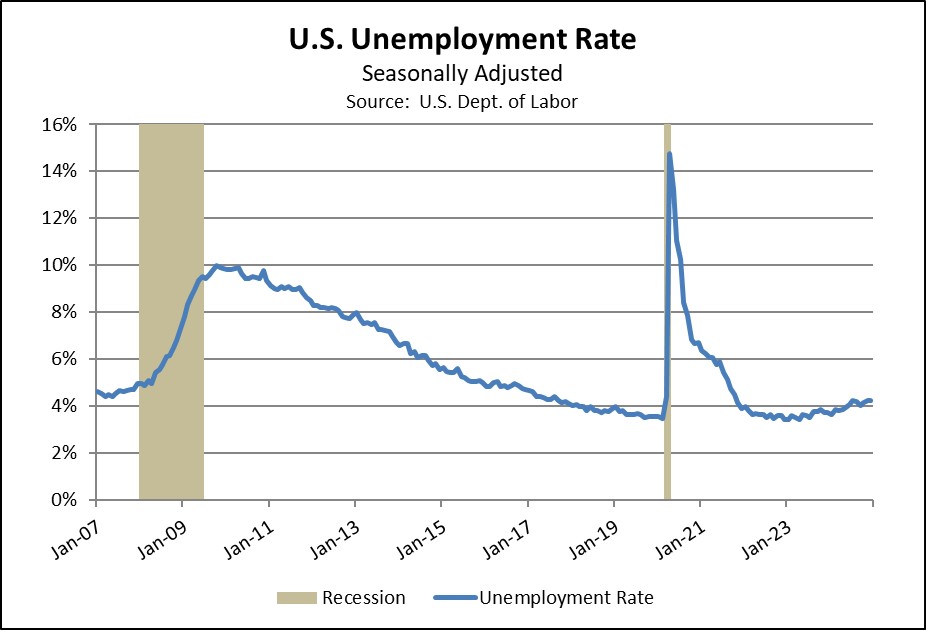
US Military: Internal data shows that the US Army has already enlisted 30,000 new recruits since October 1, achieving almost half its goal of 61,000 for the entire fiscal year and reversing the historically weak recruitment of recent years. Historically, the armed services have struggled to recruit in strong labor markets, so the improvement this fiscal year so far could partly reflect the modestly higher rate of civilian unemployment since early 2023.
- The improvement also reportedly reflects the Army’s success with new recruiting programs.
- For example, since many youths today struggle to meet the Army’s physical-fitness and educational standards, the new programs help young people get into shape and boost their scores on the Army entrance exam. Other programs have helped by giving recruits more freedom in choosing their initial duty station.
Bi-Weekly Geopolitical Podcast – #58 “Syrian Surprise – Implications of a Sudden Regime Change” (Posted 1/13/25)
Bi-Weekly Geopolitical Report – Syrian Surprise: Implications of a Sudden Regime Change (January 13, 2025)
by Daniel Ortwerth, CFA | PDF
On December 8, 2024, the world awoke to a dramatically changed order in the Middle East. Seemingly out of nowhere, the Assad family regime, which had stood for 54 years and withstood 13 years of civil war, fell to a sudden rebel onslaught. What seemingly began only 11 days prior as an isolated effort by a rebel group in the northwest corner of Syria quickly became an unstoppable advance through the country’s major population centers and culminated in the overthrow of the regime, the flight of its leader into exile, and the ascendancy of a new governing authority. Since the new power in Damascus has entirely different loyalties than the regime it deposed, this development throws the regional balance of power into question, with geopolitical and global investment implications.
This report begins with a review of Syrian history and continues with an overview of the pertinent facts of 21st century Syria and the surprise rebel initiative that led to the change of power. Upon this backdrop, we discuss the interests and priorities of the significant regional and global players who have a stake in the future of Syria. As always, we conclude with implications for investors.
Don’t miss our accompanying podcasts, available on our website and most podcast platforms: Apple | Spotify
Daily Comment (January 13, 2025)
by Patrick Fearon-Hernandez, CFA, and Thomas Wash
[Posted: 9:30 AM ET] | PDF
Our Comment today opens with a few words on the global bond sell-off, which so far this morning is still pushing yields higher. We next review several other international and US developments with the potential to affect the financial markets, including more signs that China is struggling with excess capacity in its industrial sector and new projections pointing to a boom in the construction of natural gas-fired energy plants in the US.
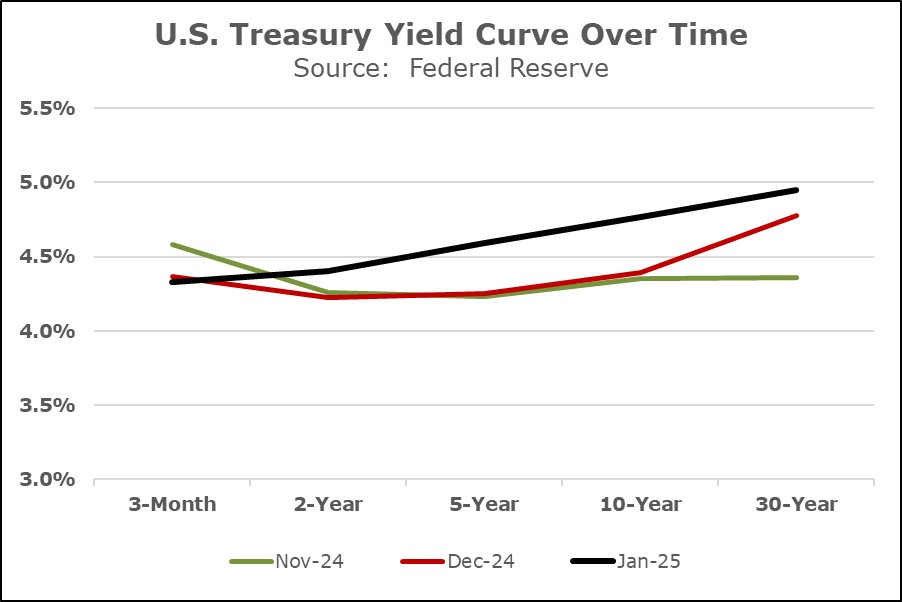
Global Financial Markets: Global bond yields continue to rise this morning, driven largely by outsized US economic growth and concerns about rising fiscal deficits. As we noted in our Comment on Friday, the strong December employment report has sparked speculation that the Federal Reserve may stop cutting interest rates. As a result, the US Treasury yield curve is decidedly upward sloping again, reflecting the current “bear steepening.”
- The prospect for continued fast economic growth and high interest rates in the US is also boosting the value of the dollar and punishing foreign currencies.
- For example, the euro so far today is trading down approximately 0.5% to $1.0202, while the British pound has plummeted 0.7% to $1.2121.
Global Uranium Market: The price for enriched uranium has hit a record $190 per separative work unit (the standard way to value the effort required to separate uranium into its various isotopes). That marks an enormous jump from $56 three years ago, mostly reflecting global plans to increase the use of nuclear power and looming Western sanctions against Russia, the main refiner of uranium.
- Enriched uranium is typically sold to nuclear generating firms under long-term contracts, so its value can diverge from spot prices for mined uranium. Indeed, while anticipated demand growth and looming sanctions drove up enriched uranium prices in 2024, spot prices were in a correction and fell some 28%.
- Importantly, the continuing rise in enriched uranium prices holds the prospect for a rebound in spot uranium prices. We continue to believe that spot uranium could offer solid investment returns in the coming years.
Eurozone: Philip Lane, chief economist at the European Central Bank, said in an interview that his institution should work to find a “middle path” to cutting interest rates further. According to Lane, the ECB policymakers need to find a rate-cutting path that would still push down price inflation but also support economic growth. Since Lane’s statement points to continued eurozone rate cuts, while investors now think US rates may be on hold, the news may be contributing to the euro’s weakness so far today.
Germany: Laying out the platform of the far-right Alternative for Germany (AfD) in next month’s election, party co-leader and chancellor candidate Alice Weidel stressed that an AfD government would push for the mass repatriation of immigrants. Specifically, Weidel used the controversial, expansive term “remigration,” which far-right politicians in Germany define as forcibly removing immigrants who either break the law or “refuse to integrate,” regardless of their citizenship status.
- Public opinion polls currently show AfD garnering about 20% of the February vote, second only to the center-right Christian Democratic Union, at about 32%. Nevertheless, AfD’s prospects for joining a government are in question, as Germany’s mainstream parties are all reluctant to strike a coalition deal with it.
- Nevertheless, the large chunk of the electorate that supports AfD illustrates the extent to which anti-immigration sentiment has risen in Europe. That suggests that European migration policy will continue to tighten going forward, despite the region’s falling birth rate and demographic challenges.
China: The China Photovoltaic Industry Association has complained that its new cartel aimed at curbing excess production and boosting prices is already being undermined by a Xinjiang solar energy project. In its search for solar panel suppliers, the project reportedly set a bidding limit far below the cartel’s price floor of 0.68 yuan ($0.09) per watt and awarded contracts to the firms with the lowest prices. The incident suggests that the Chinese solar panel industry will continue to struggle with excess capacity, falling prices, and vanishing profits.
- Along with electric vehicles, the solar energy industry is one of the best examples of how China’s industrial policies have created massive problems with excess capacity, high debt, and budding financial problems.
- Since China’s solar energy industry is mostly made up of relatively smaller private firms, it is proving hard to discipline. The government in 2024 issued new regulations to limit the investment in new capacity, but even the existing capacity is far more than enough to supply global demand.
- It now appears that the industry’s effort to build a self-regulating cartel also won’t stabilize prices or boost profitability. As producers export their excess production at fire sale prices in a desperate effort to survive, one result will likely be continued economic tensions between China and its trade partners.
Malaysia: In a Financial Times interview, Economy Minister Rafizi Ramli said Chinese technology companies are quickly ramping up their investments in Malaysia to get around the new US import tariffs that the incoming Trump administration is expected to impose against China. The government expects Chinese firms to invest billions of dollars in new production facilities in Malaysia in the coming years, giving a boost to economic growth.
United States-China: The outgoing Biden administration today unveiled new, expansive export controls on advanced computer chips for artificial intelligence. The rules aim to make it harder for China and other potential adversaries to acquire the chips, which can be used for both civilian and military purposes. Under the rules, 20 close US allies and partners will have uninhibited access to advanced AI-related chips with US technology, but most other countries will require licenses.
- The new rules tighten the Biden administration’s previous efforts to crimp Chinese access to advanced AI chips. The previous efforts have in some cases been undermined by loopholes and workarounds.
- At least temporarily, the new rules are likely to rile Beijing and the countries that will now be subject to US licensing requirements. However, it isn’t clear that the incoming Trump administration would maintain the rules. Given the strong influence that tech titans have in Trump’s circle, it would not be a surprise if they work to water down or reverse the Biden rules in order to preserve US tech firms’ access to the Chinese market.
US Energy Industry: Energy consultancy Enverus has issued a report saying the new data centers being built for the AI industry will spur the construction of some 80 new natural gas-fired energy plants in the US by 2030. The report builds on other analysis projecting the new data centers and their enormous energy requirements will also spur more nuclear power generation. However, gas-fired plants are cheaper and quicker to build, so it’s reasonable to expect they will satisfy much of the new electricity demand and potentially help drive gas prices higher.
US Insurance Industry: California Governor Gavin Newsom yesterday said the multiple wildfires that have destroyed some 40,000 acres of Los Angeles could be the costliest disaster in US history. AccuWeather estimates the total economic loss from the fires will be $135 billion to $150 billion, and early estimates suggest insured losses will be upward of $20 billion. Because of the high insured losses, property insurers are expected to suffer big losses and pull back from the California market, driving many property owners to the state’s backstop plan.
Daily Comment (January 10, 2025)
by Patrick Fearon-Hernandez, CFA, and Thomas Wash
[Posted: 9:30 AM ET] | PDF
Good morning! The market is reacting to the latest jobs data. In sports news, Real Madrid triumphed over Mallorca to advance to the final of the Spanish Super Cup. Today’s Comment will delve into the recent rise in UK gilt yields, explore the potential factors behind a prolonged conflict in Ukraine, and discuss other relevant market developments. As always, the report will include a summary of key international and domestic economic data releases.
Another Truss Moment? UK long-term bond yields soared to multi-decade peaks on Thursday, driven by escalating concerns about the nation’s ability to manage its burgeoning debt. The 10-year gilt yield reached 4.82%, its highest level since 2008, while the 30-year gilt yield climbed to 5.38%, its most elevated point since 1998. This surge in interest rates exerted downward pressure on the pound sterling (GBP), causing it to depreciate by 0.6% on the day.
- The cause of the market sell-off remains uncertain, but a potential contributing factor could be the growing tensions between London and Washington. It has been reported that Elon Musk, a prominent figure within the Trump administration, is rumored to be trying to oust UK Prime Minister Keir Starmer before the next election.
- Despite President-elect Donald Trump not having expressed any specific criticism of the UK, concerns linger regarding potential tariffs that could impede the nation’s economic growth. This anxiety emerges at a critical moment when the UK government depends on a strong economy to stave off the severe budget cuts needed to tackle the growing national debt.
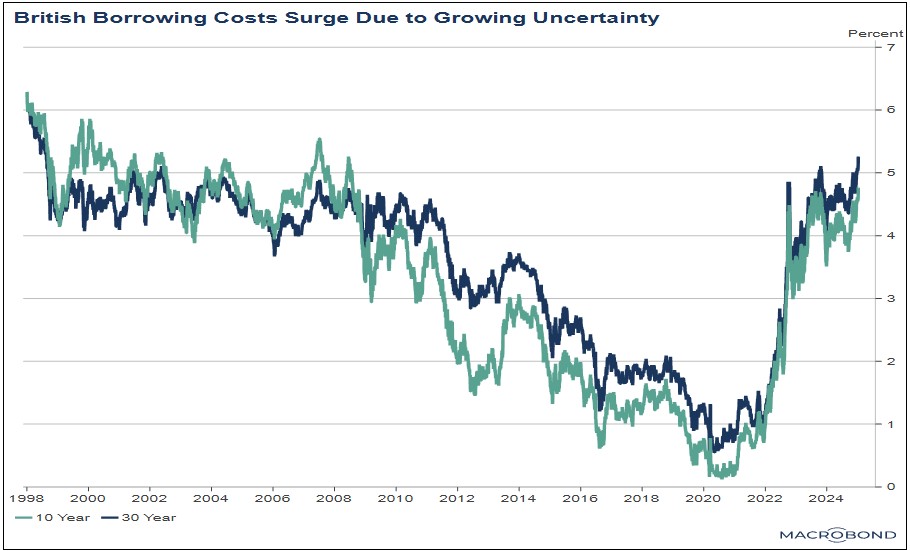
- Since the United Kingdom voted to leave the European Union in 2016, it has had six prime ministers and has seen its general government debt surpass the total of GDP for the first time in at least 50 years. Hence, the rise in yields may be driven by the possibility of growing political instability and an increase in the government deficit.
- While the recent rise in yields is concerning, its moderate pace is unlikely to trigger a market rout similar to the one that occurred in 2022 following the release of the controversial mini budget under UK PM Liz Truss. However, the increase in borrowing costs could weigh on the economic growth of the country.
Another Lifeline? President-elect Donald Trump has extended the timeline for ending the conflict in Ukraine from 24 hours after taking office to six months. This shift in strategy appears to stem from concerns within the administration that a hasty resolution could be perceived as a rushed or poorly executed decision, potentially impacting the president’s public image.
- The reported U-turn also appears to be an olive branch to Europe, aimed at persuading the administration to sustain its support for Ukraine. Although the president campaigned on ending US funding for the war, he has been notably quieter on the issue since winning the election.
- In fact, just days after winning the election, Trump reportedly warned Russian President Vladimir Putin against escalating the war and reminded the Russian leader that the US “has weapons, too.”
- Despite President-elect Trump’s initial reluctance to end the war, discussions between the US and Russia appear to be taking shape. Trump is reportedly open to a peace deal that would allow Russia to retain control over several captured regions. However, Russian delegates have expressed dissatisfaction with the initial proposal.
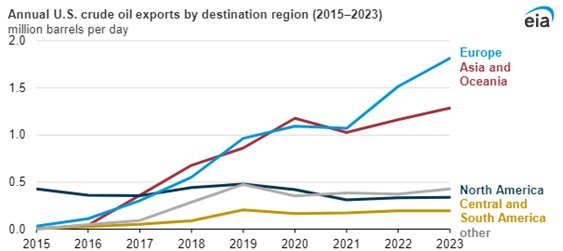
- Although the end of the conflict is a positive development, investors should remain mindful that Russia remains a strong competitor to the US in the global energy market. A key takeaway from the conflict is that sanctions on Russia created new opportunities for US energy producers to capture market share in Europe. The administration’s desire for Europe to increase its reliance on US energy will likely lead to heightened scrutiny by the US administration regarding any resurgence of Russian energy exports.
Japan Inflation Optimism: There are growing signs that the country may have finally escaped its deflationary spiral. The Bank of Japan is expected to upwardly revise its inflation outlook. While the recent revisions have been attributed to an increase in rice prices and the depreciation of the currency, there are also increasing signs that wages have started to pick up.
- The central bank’s decision to raise its inflation forecast signals a stronger commitment to tightening monetary policy to counteract persistent price pressures and safeguard economic stability. This is likely to result in higher Japanese bond yields and a stronger yen (JPY). However, given the prevailing economic slowdown, the impact on equities may be mixed.
China’s Troubles Deepen: The People’s Bank of China has halted purchases of government bonds, a move widely interpreted as an attempt to dampen speculation about the country’s economic growth prospects. This action could further fuel fears of a deflationary spiral in the world’s second-largest economy.
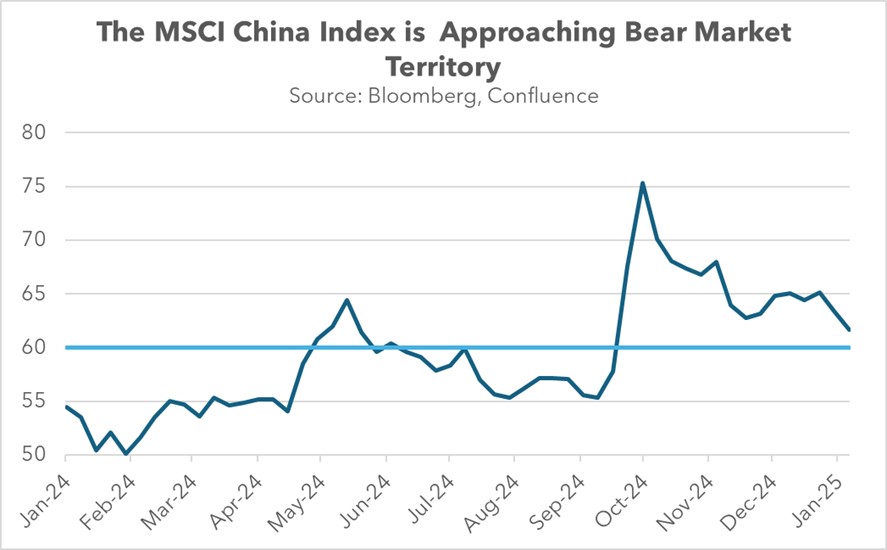
- At the same time, the MSCI China Index seems poised to enter a bear market in the next few days as investors brace for escalating trade tensions between China and the US. On Friday, the index dropped by as much as 1.1%, bringing its total decline closer to 20% since its peak on October 7, 2024.
- Earlier this week, it was reported that outgoing President Joe Biden plans to announce new restrictions on AI chips as the US seeks to maintain its competitive edge over China in the sector.
- As noted in our previous reports, China is likely to face challenges stemming from the five Ds: weak consumer demand, overcapacity coupled with high debt, unfavorable demographics, economic disincentives due to the Communist Party’s market interventions, and the impact of Western decoupling in trade, technology, and capital flows.
DOGE’s Setback: Tesla CEO Elon Musk acknowledged on Wednesday that his newly formed Department of Government Efficiency may fall short of its ambitious goal of reducing the federal deficit by $2 trillion, potentially achieving only half of that target.
- While this news is disappointing amid the market’s strong preference for fiscal restraint, investor skepticism about the feasibility of Musk’s ambitious deficit reduction target was evident from the start.
- That said, we still believe that efforts to reduce government spending are likely to be bullish for bond prices.
Labor Talks: US dockworkers have reached a tentative agreement with their employers, averting a potential shutdown of East and Gulf Coast ports next week. This new deal includes provisions for a framework to address the impact of automation on the workforce, aiming to protect workers’ jobs as technology advances. If ratified, this agreement will have a six-year term.