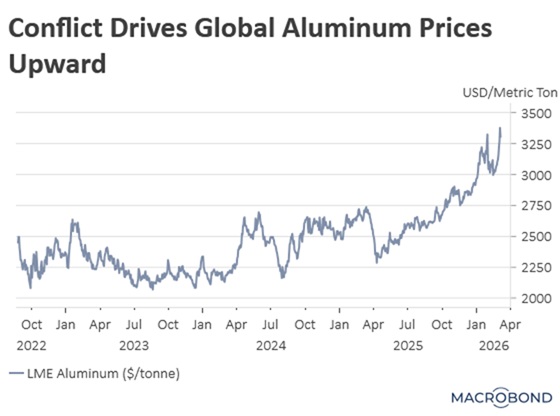


Daily Comment (March 2, 2026)

by Patrick Fearon-Hernandez, CFA, and Thomas Wash

[Posted: 9:30 AM ET] | PDF

Our Comment today opens with some thoughts on the new war against Iran that the US and Israel launched on Saturday. We next review several other international and US developments that could affect the financial markets today, including more signs of weak consumer demand in China and a continued effort by Canada and India to reduce their trade dependency on the US.

United States-Israel-Iran: Obviously, the weekend launch of a joint US-Israeli military attack on Iran is the key news that will drive the markets today. The news has been widely reported, so we’ll just focus on the key highlights for investors. Importantly, the attacks targeted both Iran’s political leadership and its military, resulting in the death of supreme leader Ayatollah Khamenei on Saturday as well as dozens of other high officials. Nevertheless, the Iranian military has launched retaliatory strikes across the region, and military operations continue.

  • Reports suggest that Khamenei dispersed political and military authority before the fighting started, ensuring in particular that the Iranian military had standing orders to keep fighting even if he were killed. Indeed, some reports suggest the Iranian Revolutionary Guards Corps is now fighting nearly independently. That could make it difficult to stop the fighting even if some political leaders or groups in Iran decide they want peace.
  • More broadly, the chaos has the potential to spark secession efforts by various groups within Iran, similar efforts by groups in other regional countries, and/or intervention by other regional powers. In other words, the situation continues to pose the risk of a wider regional war.
  • The main goals of the US appear to be further degrading Iran’s military capability (especially its nuclear and missile programs) and prompting a popular uprising that would lead to a new regime or at least a serious alteration of the current one. However, if that doesn’t occur within the next several weeks, we suspect President Trump would declare victory and stop the operation. We believe Trump is especially cognizant that US voters have little stomach for yet another long war aimed at regime change in the Middle East.
  • All the same, military operations are notoriously difficult to control. At the moment, much risk remains, and investors are rightly on edge about further conflict and risks related to the region’s energy supplies.
  • Reports this morning say Iran has now staged a drone attack on one of Saudi Arabia’s most important oil facilities at Ras Tanura and is expanding its attacks on shipping through the Strait of Hormuz. That will raise the risk of Saudi Arabia joining the attacks on Iran and potentially spur Iran to further escalate its attacks on Saudi Arabia.
  • Separately, other reports say Iranian attacks have forced Qatar to shut down its liquefied natural gas production, causing global prices to soar and risking bringing Qatar into the conflict.
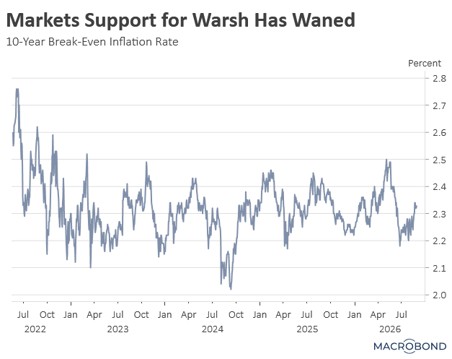
  • As a result, global oil prices are surging this morning, with Brent up about 8.6% to $79.04 per barrel. Natural gas prices have also surged. Gold prices are up 3.1% to $5,409.40 per ounce, but Treasury obligations have weakened, probably on concerns about rising consumer price inflation. Benchmark 10-year Treasury yields as of this writing are up modestly to 4.006%. Finally, US and European defense stocks are getting a strong bid.

China: BYD, which is now the world’s largest electric vehicle maker, said its February sales were down a whopping 41% year-over-year as a 50% rise in export sales was more than offset by a 65% plunge in domestic sales. The figures show how Chinese firms’ efforts to make up for China’s weak domestic demand by going abroad won’t necessarily work. The figures therefore illustrate a key vulnerability for Chinese stocks that are heavily focused on sales to domestic consumers.

South Korea: According to new data from the Trade Ministry, exports in February were up a strong 29% year-over-year, beating expectations and almost matching the 34% rise in January. The data show that much of the strength came from semiconductors, reflecting South Korea’s strength in producing memory chips. This serves as a reminder that foreign economies and stocks are also benefiting from the surge in US data-center construction for artificial intelligence.

Canada-India: During Canadian Prime Minister Carney’s visit to New Delhi today, he and Indian Prime Minister Modi agreed to accelerate their talks on a free-trade deal, seeking to sign a pact by the end of the year. The agreement illustrates how both countries are trying to broaden their trade relationships to reduce their dependence on the US. Over time, the plethora of new non-US trade deals could potentially rejigger world trade flows and affect global stocks, although it’s probably too early to identify the winners and losers at this point.

Argentina: In President Milei’s biggest legislative victory so far, the Senate on Friday passed a major deregulation of the labor market that will make it easier for firms to lay off employees. The reform will also roll back rigid restraints on hiring and working hours. By giving companies greater flexibility, the reform could improve economic efficiency and ease business conditions. That could also help boost foreign investment in the country. Overall, the reform is likely to be positive for the Argentine economy and stock values.

US Artificial Intelligence (AI) Industry: As threatened, the White House late Friday ordered all federal agencies to halt use of Anthropic’s Claude AI model over the company’s insistence on specific prohibitions against the Pentagon using the model for mass surveillance of US citizens or the autonomous killing of foreign adversaries. The Pentagon also designated Anthropic a “Supply-Chain Risk to National Security,” preventing any company doing business with the US military from also having a commercial relationship with Anthropic.

  • The big winner from the confrontation is likely to be OpenAI, which closed on a new funding round worth $110 billion on Friday and then later announced that it had reached a deal in which the Pentagon would use its AI models subject to red lines similar to those that Anthropic had demanded.
  • Nevertheless, the incident is another example of how the US government has now become much more aggressive about intervening in the economy and pressuring private firms to adopt or abandon specific policies.

Global Asset-Backed Securities Market: Investors in the asset-backed securities market have become alarmed by the collapse of British mortgage lender Managed Financial Solutions last week after it was discovered that the firm double-pledged collateral on some of its bonds. The scandal echoed recent concerns about similar shenanigans in the US asset-backed markets. These incidents are likely to make asset-backed investors increasingly skittish, which would likely raise the risk of a credit crunch and financial disruptions.

View PDF

Asset Allocation Bi-Weekly – The Dip That Didn’t Bounce (March 2, 2026)

by Thomas Wash | PDF

Retail investors have emerged as a crucial stabilizing force behind the ascent of the “Magnificent 7” in recent years. Rather than displacing institutional or ETF demand, their participation has added a new, resilient layer of support. This cohort’s propensity to buy and hold mega-cap tech stocks, even through periods of market anxiety, has helped sustain momentum and enthusiasm for these names, insulating them to some degree from the sharper sentiment swings affecting the broader market.

This distinct retail influence extends beyond equities, manifesting clearly in the behavior of Bitcoin. Estimates suggest that roughly two-thirds of Bitcoin’s supply remains in the hands of individual investors. Throughout 2024 and 2025, a notable correlation emerged, with Bitcoin and major tech and software names frequently moving in tandem. This parallel behavior reinforces the narrative that for many investors, particularly those with a higher risk appetite, mega-cap tech and crypto have effectively merged into a single, cohesive trade.

The sharp rise in Bitcoin and many tech-related stocks has coincided with a wave of new retail investors entering equity and crypto markets. This surge has been supported by pandemic-era stimulus payments, which boosted households’ risk-taking capacity, and by the rapid growth of easy-to-use, commission-free trading apps such as Robinhood, drawing many younger investors into markets for the first time. As a result of this new participation, the share of the daily trading volume of US equities attributable to individual investors went from the low single-digits pre-pandemic to nearly 20%.

This increased retail participation has pushed a larger share of market attention toward future growth potential and market themes, particularly in high‑growth technology and AI‑related names, rather than strictly traditional valuation metrics. Many retail investors have piled into rising tech stars, such as Nvidia, and into cryptocurrencies at the same time, often under the belief that prices would keep climbing, helping to cement a “buy‑the‑dip” mentality in which market pullbacks were frequently met with renewed retail buying.

This newer approach to investing has provided meaningful support to markets during periods of stress as it has been a source of incremental demand. Most notably, after President Trump’s “Liberation Day” tariff announcement sparked a sharp sell‑off, a strong wave of retail dip‑buying helped stabilize prices and fuel a powerful rebound. Also, brokerage and bank data indicate that retail investors’ returns around this episode and over 2025, as a whole, compared very favorably with many institutional strategies.

A major driver of this renewed wave of retail buying is the influx of younger investors into the market. Many of them have lived through a recession but have not experienced a deep, protracted equity downturn driven by widespread corporate failures. The only meaningful market pullback they recall is the 2022 episode, during which many of the hardest hit names later rebounded and went on to post extraordinary gains. As a result, many of these younger investors have held out hope that the equity market can help them accelerate their savings.

That said, retail investors — particularly younger cohorts — may prove to be a less reliable source of support for the market going forward. Using Bitcoin as a reference point, there are signs that individual traders have now become more risk‑averse, and this shift is starting to weigh on broader sentiment. This helps explain why the tech sector has seen limited upside so far this year, as investors continue to grapple with the true profitability of AI‑focused firms in light of their rising debt burdens and the threat they pose of triggering a broader “SaaS-pocalypse.”

While retail investors are likely to play a bigger role in markets over time, current uncertainty may prevent them from acting as buyers of last resort during future periods of stress. This growing risk aversion is especially likely to weigh on familiar large cap names in the technology sector. In our view, clients should pay closer attention to overlooked areas of the market as persistent pessimism toward mega‑cap tech could eventually drive a broader sector rotation as investors look to diversify into other industries.

odative toward rate cuts to nurture AI-driven growth, he would almost certainly counterbalance this with a hawkish, determined campaign to shrink the Fed’s balance sheet.

View PDF

The accompanying podcast for this report will be available later this week.

Daily Comment (February 27, 2026)

by Patrick Fearon-Hernandez, CFA, and Thomas Wash

[Posted: 9:30 AM ET] | PDF

Our Comment opens with our thoughts on the recent disagreement between Anthropic and the Department of Defense. We then turn to the UK by-election, examining the broader populist wave sweeping across the West. Following that, we discuss the ongoing global chip shortage, provide an update on the Iran nuclear talks, and highlight recent solar funding advocacy within the White House. We also include a summary of key economic data from the United States and developments in global markets.

Pentagon Anthropic: Tensions between the US government and Anthropic escalated this week after the company said it cannot, in good conscience, agree to the Pentagon’s demand that its AI models be available for “all lawful purposes.” The stance puts Anthropic at risk of losing a Defense Department contract worth up to $200 million and of being labeled a “supply chain risk,” potentially barring its technology from Pentagon programs and key contractors. It also leaves the company vulnerable to the risk of being compelled to comply under the Defense Production Act.

  • The two sides have spent weeks negotiating over the Defense Department’s use of Anthropic’s systems for military and intelligence applications. Anthropic has insisted on explicit limits barring domestic mass surveillance and fully autonomous weapons that make targeting decisions without human oversight, while the Pentagon argues that existing law and internal policy already constrain such uses and that its contractors should not be able to veto lawful military operations.
  • AI is becoming increasingly integrated across the broader economy, and Anthropic has played a particularly prominent role. Its powerful AI tools have been a major catalyst for the so‑called “SaaS collapse,” reshaping how businesses use and value traditional software. As a result, the company is widely regarded as one of the leading players in the technology sector and is becoming strategically important to the country.
  • While there has been no official announcement on the government’s next steps, we see a meaningful risk that it could invoke its authority to assume control of Anthropic technology. If so, this would likely mark another step in a longer‑term shift toward a more activist state role in the economy and a further blurring of lines between the public and private sectors.
  • This shift in the global economy is unlikely to have a meaningful short‑term impact on markets as companies will, for now, continue to operate in a relatively market‑friendly environment. However, this could change over the longer term, perhaps over the next decade, with firms increasingly prioritizing government demands over shareholder interests. As a result, investors might consider greater international diversification to avoid excessive concentration in any single region.

Populist Wave: A strong performance by a left‑wing party in the UK highlights the growing appeal of populist movements across the West. On Friday, the Green Party won a key parliamentary by‑election in southeast Manchester, a seat long considered safe for the incumbent Labour Party. Labour not only lost to the Greens but also finished behind the right‑wing populist Reform UK party. The result is likely to fuel concerns that Labour is losing support just a year after taking power and may also signal the emergence of a new populist wave.

  • The Green Party’s election victory underscores the growing appeal of populist movements across the Western world. During its campaign, the party emphasized tackling the poverty crisis, arguing that poverty is a political choice that can be addressed through changes in tax policy. This approach mirrors that of the Reform UK Party, which similarly seeks to raise workers’ wages, though it frames the issue around curbing immigration rather than fiscal reform.
  • This growing populist trend is also evident in Europe and the United States. In Germany, the CDU/CSU has come under pressure as the far-right AfD has at times overtaken it in the polls, while some disaffected centrist voters have drifted toward parties on the left. Meanwhile, in the United States, populist figures have risen to prominence in major cities; local leaders such as New York Mayor Zohran Mamdani have cultivated high-profile relationships with populist President Donald Trump.

  • The ascendancy of populist movements appears to be a structural shift rather than a fleeting trend, driven by a public mandate for intervention in the face of rising cost of living. Should establishment parties continue to lose ground, we anticipate a tangible shift toward higher social spending and more accommodative monetary policies.
  • From a purely market perspective, right-wing populism is often regarded as the “lesser of two evils” compared to its left-wing counterpart. This preference stems from a right-wing lean toward deregulation and decentralization, which typically lowers the cost of doing business. However, investor sentiment is not strictly partisan; as demonstrated by Spain’s Socialist Party, markets are willing to tolerate left-wing administrations provided they maintain rigorous fiscal discipline.

Chip Shortage: According to IDC, the smartphone market is expected to shrink by 12.9% in 2026 due to a shortage of memory chips. This shortage is driven by a drop in the global supply of chips needed to power new technology. The report highlights how the rise of AI is starting to have a crowding-out effect, in which the sector’s enormous demand is beginning to price out other industries. As a result, we believe the surge in demand for chips could lead to either higher inflation or lower margins for certain goods.

Iran Progress: Momentum appears to be building toward a potential US-Iran deal. On Thursday, the two sides held intensive talks on Iran’s uranium enrichment program. Tehran rejected a US proposal to transfer its enriched uranium abroad but left the issue open for further negotiation. The White House continues to favor diplomacy. Vice President Vance stressed that the US has no intention of entering a prolonged war with Iran. The parties are expected to meet again next week in Vienna.

MAGA Goes Solar: The solar lobby has partnered with conservative influencer Katie Miller and former Trump adviser Kellyanne Conway to promote solar power among right‑leaning voters. The move comes as the White House has signaled skepticism toward renewable energy, reflecting concerns about its impact on traditional fuel industries. However, growing recognition of solar as a diversified source of power, with the potential to ease pressure on the electricity grid and improve energy security, appears to have softened that stance somewhat.

View PDF

Daily Comment (November 10, 2025)

by Patrick Fearon-Hernandez, CFA, and Thomas Wash

[Posted: 9:30 AM ET] | PDF

Our Comment today opens with news of a deal between Republicans and Democrats in the Senate that will likely end the federal government shutdown in the coming days. We next review several other international and US developments that could affect the financial markets today, including analysis showing artificial intelligence firms are increasingly using exotic debt instruments to fund their AI infrastructure investments and data showing China has at least temporarily moved out of its recent deflation.

US Fiscal Policy: Eight Democrats in the Senate yesterday struck a deal with Republican leaders and started pushing through a bill that would end the federal government shutdown. Under the deal, the eight Democrats would provide the votes needed for a temporary funding measure lasting until the end of January. In return, the deal would reverse all the layoffs initiated by the White House during the shutdown and guarantee furloughed workers back-pay. However, it only ensures a vote on the Affordable Care Act (ACA) health subsidies that Democrats were holding out for.

  • Democrats originally sought to guarantee an extension of the COVID-era ACA subsidies to prevent premiums from surging, but it now looks like they could only get a promise to hold a Senate vote on the matter.
  • If the compromise bill passes the Senate, it would go to the House for its approval, which seems likely. Of course, one key risk is that the funding measure only lasts until the end of January, so another shutdown could loom in just two months if legislators can’t come to a long-term agreement on funding the government.
  • In any case, the apparent progress toward ending the government shutdown and avoiding more economic damage is giving a boost to US risk assets so far this morning.

US Artificial Intelligence Industry: An important article in the New York Times over the weekend indicates that AI-related companies are increasingly turning to exotic debt instruments to pay for their massive investments in AI infrastructure. The article indicates that while many big, well-known hyperscalers and other firms initially relied largely on their own cash flow to build data centers, they are increasingly issuing asset-backed securities that can be relatively risky and harder for investors to track or analyze.

  • As the AI boom proceeds, driving up stock prices for AI-related companies and spurring massive investment in new data centers, models, and other assets, we’ve seen that investors are increasingly asking whether this is a bubble that’s ready to pop.
  • One likely indicator of heightened risk would be if today’s capital investment was creating excess capacity and was being financed largely by debt. At the moment, it still appears that the new data centers are being fully utilized, and the use of debt is still not especially high. Nevertheless, we think risks will increase more substantially when and if the boom starts to create unused capacity and starts to rely on large amounts of debt.

US Stock Market: New data from Charles Schwab’s STAX index of customer trading activity shows younger investors, such as those in Gen Z, have become less likely than those in older generations to “buy the dip” when stock prices pull back. The data suggests Gen Z investors have put more of their assets into bitcoin products that are now down for the year, possibly making them more skittish. Where Gen Z investors have been net buyers, they’ve focused on tech firms with solid balance sheets and positive current earnings.

  • On Friday, bitcoin prices fell below the psychologically important $100,000 level.
  • That means bitcoin has now given up virtually all its gains for the year-to-date.

US Defense Industry: On Friday, Defense Secretary Hegseth laid out several reforms to the Pentagon’s acquisition policies aimed at increasing competition, lowering costs, and speeding weapons development. Importantly, Hegseth said the five main defense contractors would be expected to invest more of their own capital into productive capacity and quicken the pace of innovation. The new policies, which we had been monitoring, help explain why we think foreign defense stocks are likely to outperform their US counterparts going forward.

US Meatpacking Industry: Following a social media post in which President Trump accused big meatpackers of artificially hiking prices, the Justice Department on Saturday said it has opened an investigation into collusion and price fixing among firms including JBS, Cargill, Tyson Foods, and National Beef. The “Big Four” meatpackers collectively slaughter 85% of the country’s cattle and most of its hogs, so the administration’s effort to break up their power and bring down prices could potentially lead to major changes in the industry.

United States-Hungary-Russia: After meeting with Hungarian Prime Minister Orbán at the White House on Friday, President Trump has granted Hungary a one-year extension on his sanctions targeting countries that buy Russian oil. Orbán also agreed to have Hungary buy about $600 million of liquified natural gas from the US. In any case, the sanctions exemption provides a bit of relief for Russia and somewhat reduces the impact of the new sanctions on the global oil market.

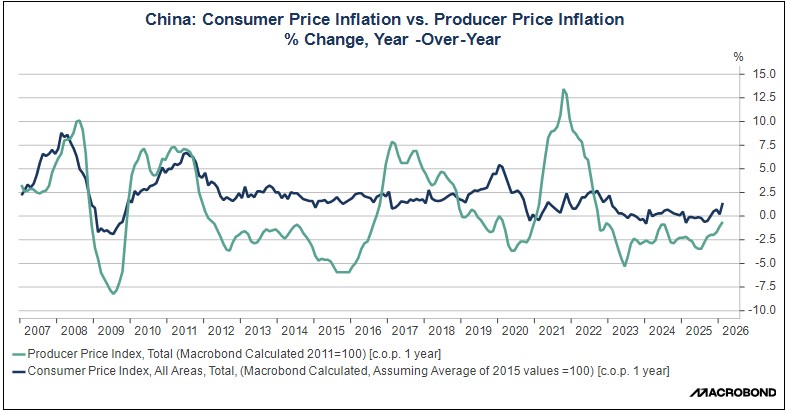
Chinese Economy: The October consumer price index (CPI) was unexpectedly up 0.2% from the same month one year earlier, just bringing the country out of deflation. Excluding the volatile food and energy components, the October core CPI was up 1.2%. The exit from deflation has given a boost to Chinese stocks today, although it’s still not clear if prices will continue to rise going forward.

  • Other data today showed Chinese producer prices are still under pressure from the country’s housing glut, weak consumer demand, and excess industrial capacity.
  • The October producer price index was down 2.1% year-over-year, for its 37th straight month of contraction.

Chinese Military: In a ceremony on Friday, the Chinese military commissioned the Fujian, the country’s third aircraft carrier overall and its second domestically produced carrier. The vessel incorporates several advanced technologies, such as electromagnetic catapults that allow it to launch a greater variety of aircraft at a quicker pace. That should boost China’s ability to keep the US Navy at bay in case of a conflict in the Western Pacific Ocean. However, the ship doesn’t have nuclear propulsion like US carriers do, so its ability to project power is somewhat limited.

Japan-Taiwan-China: In a parliamentary debate on how Japan should respond to a potential Chinese effort to seize control of Taiwan by force, Japanese Prime Minister Takaichi on Friday said, “If battleships are used and a naval blockade involves the use of force, I believe that would, by any measure, constitute a situation that could be deemed a threat to Japan’s survival,” implying she would order the Japanese military to get involved.

  • Takaichi today tried to soften the controversial statement, saying she hasn’t changed Japan’s defense policy.
  • Nevertheless, the statement has sparked controversy in Japan, underlining Takaichi’s reputation as an anti-China hawk.

View PDF

Keller Quarterly (October 2025)

Letter to Investors | PDF

“The more things change, the more they stay the same.” That old maxim is proving true again as the financial markets are experiencing the curious phenomenon of dual gold rushes. The first is a rush to own the yellow metal itself. The second is a race to make money in artificial intelligence (AI). These two movements dominating the news are not related, in my view, but each reflects important trends that investors need to be aware of.

As to the barbarous relic[1] (gold), deglobalization and US government policies emanating from both parties over the last 10 years are pressuring the dollar down relative to other currencies. In this regard, gold is a currency, one that cannot be manufactured at will by any central bank. And speaking of governments, foreign reserve managers worldwide are diversifying their foreign reserves by rebuilding their gold reserves after spending most of the last 55 years reducing their holdings. They’ve been busy buying gold for at least the last four years, and we expect this to continue. We’ve been arguing for over a decade that deglobalization is dollar-bearish and will worsen inflation. These realizations are finally coming to pass, influencing the gold market. For several years we have allocated to gold in Confluence strategies that involve commodity exposure (Asset Allocation and Global Hard Assets), and we expect to continue holding these positions.

The other gold rush is even more complicated. In modern parlance, the phrase gold rush denotes a race by investors to get rich by investing in new technologies that seem to have “can’t miss” potential. This, of course, is an analogy to the great gold rushes of the 19th century. The two most famous were the 1849 California gold rush and the 1896 Yukon gold rush, but there have been many others in US history, starting with the North Carolina gold rush of 1799. In fact, a new discovery somewhere precipitated another gold rush about every 20 to 30 years. It’s a historical oddity that stock market “gold rushes” occur at about the same frequency. Starting with the railroad boom of the post-Civil War era, we have had similar “gold rushes” for automobiles, radio, aeronautics, semiconductors, personal computers, the internet, and cell phones. Now, it’s AI.

Each one of these technological advancements has eventually proven to be every bit as economically and socially important as early investors thought they’d be. Unfortunately for those gold rush speculators, such booms (bubbles?) suffered from two common faults. First, in their haste to participate in the new technology, investors threw money at the stocks of many companies that eventually failed. It’s a fact that winners in new technological races are greatly outnumbered by the losers. Second, investors have tended to badly overvalue the future worth of these businesses. For example, we saw this on display in the internet bubble of 1999-2000. Not only did many of those dot-coms fail, but the stock prices of the surviving internet and telecom stocks set highs that were not equaled for many years. The NASDAQ Composite Index set a high in 2000 that was not equaled until 2015.

We’re seeing the same thing in the AI race today. Our own Thomas Wash reported in a recent Asset Allocation Bi-Weekly[2] that a study by MIT showed 95% of the companies investing in AI were earning a zero return. OpenAI, the private company that produces ChatGPT, was recently valued by investors at $500 billion, which is over 38 times the revenue they expect this year. Of course, the company is unprofitable in the extreme and does not even expect to be cash flow positive for another four years.

Is anyone making money on AI? Yes, the companies selling the products needed to build out the AI server farms: companies that make semiconductors, servers, cooling systems, data centers, electric generating equipment, etc. In our gold rush analogy, these are the makers of the picks and shovels needed to prospect for gold. Those businesses made a lot of money, at least until the rush ended, even though most of the miners didn’t. The same is true today, and the “picks and shovels” stock prices are also extremely high. Nvidia, the maker of the chips everyone wants for these servers, has a market value of $4.4 trillion (greater than that of the entire German stock market), which is merely 22 times its expected 2025 sales.

We expect that AI will prove to be every bit as economically important as its fans expect, but we caution investors not to over-invest in the sector. Such overly enthusiastic early excursions into economy-changing technologies of the past often ended badly. While we own a few AI-related stocks in our equity portfolios (and within the ETFs in our Asset Allocation portfolios), great businesses that we’ve owned for many years, we have stayed well diversified among many industries. We’re not speculators, but long-term investors. In a time of technological excitement, that’s a distinction that investors need to remember.

These Technology and Communications sectors are now worth 45% to 50% of the major US stock indexes, an amazing figure that, in my opinion, overvalues their economic value over the next years. This rapid run-up in prices has pressured downward the valuations of virtually every other sector of the stock market, leaving the stocks of many excellent businesses anywhere from reasonably valued to downright cheap. These include many outstanding dividend-payers. We cannot predict how long the current AI boom will last (nor how long the more modest valuations of other stocks will remain), but we encourage you to keep focused on your long-term objectives and concentrate, as we do, on quality businesses that will survive the boom-bust cycle.

We appreciate your confidence in us.

Gratefully,

Mark A. Keller, CFA
CEO and Chief Investment Officer


[1] A little over 100 years ago, John Maynard Keynes, the well-known British economist, famously dubbed gold “the barbarous relic.” The moniker stuck.

[2]The AI Arms Race: Navigating the Divide Between Promise and Profit,” October 6, 2025.

View PDF

Asset Allocation Quarterly (Fourth Quarter 2025)

by the Asset Allocation Committee | PDF

  • We expect no recession over our three-year forecast period, with GDP growth near trend, driven increasingly by business investment.
  • Anticipated fed funds rate cuts will stimulate the economy and address weakening labor markets.
  • Inflation is likely to remain around 3%, above the Fed’s long-term target.
  • Passive flows continue to support domestic equities, primarily benefiting large cap stocks, which we add to this quarter.
  • International developed equities are expected to benefit from government fiscal spending, attractive valuations, and a weakening dollar.
  • Gold and Treasury positions remain in the portfolios as a hedge against geopolitical risk.

ECONOMIC VIEWPOINTS

We expect economic growth to remain near its long-term trend, neither booming nor stalling. The underlying drivers of growth, however, are shifting. Business investment has become the engine of expansion, driven by tax-incentivized capital expenditures, resilient corporate balance sheets, and ongoing reshoring and automation efforts. Technology investments have been especially strong as the AI boom continues, providing a steady base for GDP growth. Additionally, both fiscal and monetary policy are expected to bolster the domestic economy over the forecast period. Fiscal policy continues to be supportive through deregulation, tax policies, and industrial initiatives. At the same time, the Federal Reserve has signaled its intention for further easing. Together, these dynamics create a constructive backdrop for continued expansion and renewed business investment.

The Atlanta Fed’s GDPNow model currently estimates real GDP growth at 3.9% for the third quarter, reinforcing the view that the US economy remains resilient. The GDPNow model provides a real-time estimate of quarterly GDP growth, continuously updated as new reports are released. This often provides an early read on the economy.

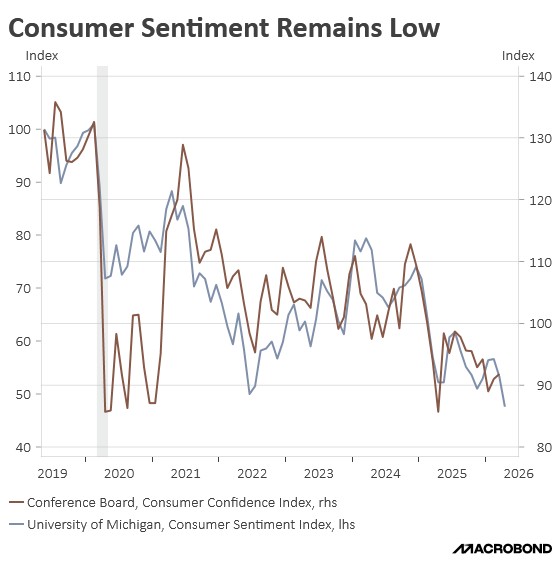
Overall, consumer data has remained stable, but we are starting to see weakness at the margin, particularly in discretionary spending. Credit card balances are rising while savings rates decline, suggesting that households are maintaining spending through leverage rather than income growth. Projections are for consumer spending to decelerate as income growth and savings buffers weaken. The current savings rate at 4.6% is below the 20-year moving average but above the post-pandemic low. This second chart indicates that an elevated level of credit card holders are making only the minimum payment on their balances, even as the current level is off its recent historic high. If credit stress intensifies, consumer confidence and spending may further deteriorate. Households are clearly facing stress, although it should be noted that most of the concerns reside with the bottom 60% of households in terms of income distribution. Higher income households continue to consume, buoyed by strong asset markets.

Household consumption depends heavily on the strength of the job market. Real wage gains have flattened, and the labor market, though still tight by historical standards, shows signs of stagnation. Many firms are opting to pause hiring, reduce hours, or allow natural attrition, in marked contrast to the labor hoarding of the past several years. Demographic shifts, particularly among foreign-born workers, and waning labor participation rates, especially among the younger cohort, are also weighing on labor supply.

Inflation is likely to settle closer to 3%, reflecting structural pressures of deglobalization, demographic constraints, and sustained fiscal support. The policy mix remains expansionary as fiscal policy continues to bolster business investment, while monetary policy, though restrictive in nominal terms, has turned neutral in real terms as inflation stabilizes. With the Fed on a path of easing and political incentives aligned for continued spending, both pillars of policy are working to uphold nominal growth.

STOCK MARKET OUTLOOK

Against this backdrop, market dynamics are being increasingly shaped by flows rather than fundamentals. The dominance of passive investment vehicles continues to benefit large cap equities and momentum-driven sectors, compressing dispersion and concentrating US market leadership. We expect this dynamic to continue in the short to medium term. Decreased recession risk and the continued capex boost within the technology sector prompted us to shift our growth/value tilt modestly toward growth to capture upside while managing valuation risk. At the same time, we reduced mid-cap exposure in favor of what we view to be more compelling opportunities in large caps. We continue to hold dividend-oriented ETFs across large and mid-cap allocations as dividends tend to provide meaningful support in the higher-volatility environment we expect. Within sector positioning, we maintain exposure to advanced military technologies amid ongoing geopolitical tensions. While we recognize that US small cap stocks should benefit from anticipated lower rates, we remain void this sector as we see more opportunities from the larger capitalization stocks. Small caps are still likely to face greater headwinds from tariff-related pressures, higher financing costs, and limited pricing power that could compress margins.

A combination of policy changes and macroeconomic trends is likely to weaken the US dollar, enhancing the return potential of international assets for US-based investors. We maintain our allocation to foreign developed markets, with selective increases this quarter in certain portfolios. Europe, in particular, is likely to experience growth on the back of increased investment in defense and infrastructure. As such, within international developed equities, we maintain a broad-based index and a Europe-focused allocation. We also maintain our international developed small cap value equity position, which could outperform amid global trade realignment as they’re less exposed to cross-border disruptions and benefit directly from regional fiscal stimulus. With significant exposure to industrials and materials, these holdings are well positioned to benefit from the aforementioned fiscal spending. Strong valuation and profitability characteristics further support the return potential within this segment.

BOND MARKET OUTLOOK

Monetary policy is likely to be accommodative over the coming year. With inflation stabilizing near 3% and growth normalizing, the Federal Reserve has signaled a willingness to ease monetary conditions. A leadership transition expected next spring is likely to reflect a more dovish posture. The next Fed chair is widely anticipated to prioritize employment resilience and debt sustainability over attempting to corral inflation to the Fed’s target level of 2%. Consequently, the new chair will likely advocate for a continued reduction in the fed funds rate following several years of tight monetary policies that elevated real rates. In addition, an end to the Fed’s quantitative tightening program will probably be part of this more dovish stance. As policy recalibrates, we expect a decline in short-term rates and a modest steepening of the yield curve.

Within fixed income, we moved more into the intermediate-maturity section of the curve. Credit markets are currently well supported by ample liquidity, reflecting low default rates, steady growth, and a manageable inflation backdrop. However, credit spreads hold the potential to widen moderately from tight levels due to heavy refinancing needs, though not to distressed levels. With spreads now below their long-term averages and little room for further tightening relative to Treasurys, we expect relatively limited return potential and recommend maintaining an underweight allocation to corporate credit.

We continue to emphasize US Treasurys and seasoned mortgage-backed securities (MBS) for stability and income, while maintaining selective exposure to high-quality speculative-grade bonds. These allocations position portfolios to benefit from the policy pivot toward easier conditions and a more balanced growth-inflation environment.

OTHER MARKETS

We continue to hold gold across all strategies, viewing it as a strategic asset. Central banks remain steady buyers, underscoring gold’s role as both a store of value and an inflation hedge. Ongoing geopolitical tensions and the global shift to diversify away from US dollar dependence are likely to keep demand firm, reinforcing the importance of gold within a diversified, risk-aware allocation. Although gold has proven to be a beneficial holding in the strategies, as it continues to mark historic highs, we are continuing to monitor its ongoing appeal.

Read the full report

Asset Allocation Fact Sheet

Daily Comment (September 25, 2025)

by Patrick Fearon-Hernandez, CFA, and Thomas Wash

[Posted: 9:30 AM ET] | PDF

Our Comment begins with an analysis of a potential change to the Fed’s inflation target. We then provide insights on the latest White House investment initiatives aimed at promoting its policy agenda. Additional topics include the possibility of further tariffs, the US’s financial support for Argentina, and the ongoing efforts to resolve the conflict in Gaza. We also provide a summary of recent global and domestic key economic indicators.

Soft Inflation Target? A growing number of Federal Reserve officials have signaled a willingness to consider an inflation target range, moving away from a rigid inflation target. This perspective has been highlighted in recent speeches by Fed Governors Christopher Waller and Michelle Bowman, alongside Atlanta Fed President Raphael Bostic. These comments emerge as the Fed digests the findings of its latest five-year policy framework review, which was completed in August.

  • Of the three officials who mentioned a possible change, only Raphael Bostic provided a concrete example. During an appearance on the “Macro Musings” podcast, the Atlanta Fed President suggested he could favor an inflation target range of 1.75% to 2.25%. Under such a framework, the Fed would likely raise interest rates if inflation exceeded the upper limit and lower them if it fell below the lower bound.
  • Adopting an inflation target range would represent a significant shift in how most central banks approach their price stability mandate. However, this model has a clear precedent. The Central Bank of Brazil successfully manages inflation with a system that includes a tolerance band of ±1.5 percentage points around its central target, effectively targeting a range from 1.50% to 4.50%.
  • Additionally, the adoption of a rigid 2% inflation target was somewhat arbitrary, as the original proposal was a bit vague. The concept was first introduced by Harvard economist Sumner Slichter in a 1952 Harper’s Weekly article, “How Bad Is Inflation?”, where he explicitly proposed a target of 2 or 3%. This was a significant departure from the prevailing economic view that price stability meant inflation should average zero in the long run.
  • A move to an inflation target range likely signals concern within the Fed that its current communication is ineffective. A defined range would force more pre-emptive and unambiguous rate adjustments ahead of policy meetings. However, this clarity could well have negative implications for bond markets, as a rules-based approach might limit the Fed’s flexibility in responding to unexpected economic shocks.

New Industrial State: The White House is considering acquiring a 10% stake in Lithium Americas as part of a renegotiation of its $2.3 billion loan from the Department of Energy. This potential move underscores a growing trend of direct government involvement in the economy, specifically aimed at ensuring that the US can become more self-sufficient in developing critical technologies and reducing reliance on foreign supply chains, particularly from China.

  • This action is the latest example of growing integration between the public and private sectors. It follows a similar deal with Intel, in which the government also took a 10% share in the company. This emerging practice suggests that the government may be seeking greater control and a direct return on investment for companies receiving significant public funding, especially in sectors deemed critical to national and economic security.
  • Beyond government support, companies receiving public backing are also attracting significant private investment. This was demonstrated on Tuesday, when it was reported that Intel, which had already secured a $2 billion investment from SoftBank, is now in talks with Apple for another cash injection. These discussions are part of Intel’s broader strategy to sell its chips to the iPhone maker, as Apple faces growing pressure to reshore much of its manufacturing capacity to the United States.
  • The evolving relationship between the government and the private sector points toward greater integration. A probable consequence is a competitive advantage for firms with close government affiliations, which may receive preferential treatment in the form of directed contracts. The long-term risk of this arrangement, however, is a potential decline in operational efficiency for these favored companies, as market discipline may be weakened by guaranteed government support.

New Tariffs: The White House has launched an investigation into imports of robotics, industrial machinery, and medical devices under Section 232 of the Trade Expansion Act. The process, which began on September 2, authorizes the president to impose tariffs on goods deemed critical to national security. While potential tariffs on these specific goods have not been discussed, the president has routinely shown a willingness to use this authority (typically imposing tariffs 50% or higher for specific products) to protect strategically important industries.

Weak Lending Standards: Debt investors are concerned about increasingly lax credit standards following the recent failures of two seemingly healthy companies. This apprehension stems from the collapse of subprime lender Tricolor and car parts supplier First Brands Group filing for bankruptcy, both of which had access to favorable financing before their respective downfalls. While this issue is not expected to trigger a financial crisis, it is raising questions about the financial health and stability of other companies in the market.

Argentine Bailout: The US government has moved to support Argentina and prevent a collapse of its currency. Treasury Secretary Scott Bessent has signaled a willingness to purchase Argentine dollar-denominated bonds and could offer standby credit via the Exchange Stabilization Fund. This action underscores the US dollar’s enduring influence globally, even as its reserve currency status faces challenges. While we maintain a bearish outlook on the dollar, we expect its decline to be volatile.

Gaza Peace Plan: The White House has reportedly presented a 21-point plan to Arab and Muslim leaders aimed at ending the war in Gaza and establishing a post-Hamas government. This diplomatic push comes as the US seeks an urgent resolution to the conflict to focus on other pressing global issues. During the discussions, the US reportedly reassured leaders that it would not permit Israel to annex the West Bank. A peaceful resolution to the Middle East conflict would expectedly help stabilize global oil markets

Energy Policy: A survey from the Federal Reserve Bank of Dallas reveals significant concern within the oil industry that current US government policies are negatively impacting profitability. Industry participants cite the administration’s dual pressures of advocating for lower energy prices while supporting tariffs on essential equipment as major factors compressing margins. This weak sentiment suggests that certain sectors may take longer than expected to adapt to the new policy environment.

View PDF

Daily Comment (September 22, 2025)

by Patrick Fearon-Hernandez, CFA, and Thomas Wash

[Posted: 9:30 AM ET] | PDF

Our Comment today opens with some observations regarding the latest surge in global gold prices. We next review several other international and US developments with the potential to affect the financial markets today, including a potential new wealth tax in France, big anti-corruption protests in the Philippines, and the White House’s new $100,000 application fee for H-1B worker visas.

Global Gold Market: Near gold futures prices as of this writing have jumped approximately 1.4% to a new record high above $3,760 per ounce, apparently reflecting investors’ increasing confidence that the Federal Reserve will cut US interest rates aggressively over the coming year. On that note, traders are looking ahead to scheduled comments later today by Stephen Miran, essentially the White House’s new representative on the Fed’s policymaking committee. Miran will likely continue to press the argument for aggressive rate cuts.

  • Other developments are probably also helping to convince investors that deeper rate cuts are coming and will continue to boost gold prices. For example, the Fed’s preferred gauge of inflation, the PCE price deflator, will be updated for August at the end of the week. If it shows well-behaved inflation, the Fed will be more likely to keep cutting rates.
  • In addition, it appears that global central banks are continuing to buy gold aggressively to diversify their portfolios away from the dollar.
  • Geopolitical tensions, central bank buying, and falling real interest rates have historically been associated with strong gold prices. As just one example of our continued positive outlook on gold, we currently maintain meaningful exposure to the yellow metal in all of Confluence’s Asset Allocation strategies and in our Global Hard Assets portfolio.

US Industrial Policy: Reports late Friday said the White House intervened last week to prevent US Steel from shutting down a major facility in Granite City, Illinois, invoking the controversial “golden share” granted to the federal government to allow Japan’s Nippon Steel to buy the firm. The move will likely fuel further concern about rising government intrusion into private-sector business decisions.

  • If those concerns worsen too much, high-profile firms at risk of intervention could see their stock values decline.
  • More broadly, such activist policy by the government could further undermine global investors’ view of the US investment environment, pushing down the value of the dollar and giving a further boost to foreign stock values.

US Immigration Policy: President Trump on Friday signed an order imposing a $100,000 fee when firms apply for H-1B visas, which are widely used to bring technology workers from China and India to work in the US. Administration officials argued the fee would ensure that firms only bring in exceptionally skilled workers, creating more opportunities for US graduates and raising their pay.

  • For US companies in the technology sector and beyond, a key risk is that the pool of competent US workers may not expand quickly enough to replace the foreign workers, leaving them with insufficient tech talent to innovate, grow, and keep boosting the value of their stock.
  • So far today, the new policy is also weighing on Indian technology service providers, which provide many of the Indian workers who arrive in the US on H-1B visas. For example, Infosys, Wipro, and Tata Consultancy Services have all seen their stock price fall by at least 2.2% so far today.

France: With political polarization continuing to complicate the effort to cut the government’s gaping budget deficit, the center-left Socialist Party is pressing for an annual 2% wealth tax on anyone with a fortune greater than 100 million EUR ($118 million). Importantly, the Socialists are crucial to the survival of Prime Minister Lecornu’s government. If they can use that position to get the proposal passed, it would undermine President Macron’s effort to make France more business friendly and would likely weigh on French equities.

Israel: After the United Kingdom, Portugal, Canada, and Australia recognized Palestine as a state over the weekend, right-wing members of Prime Minister Netanyahu’s government have responded by demanding that Israel immediately annex the West Bank, which Israel has occupied since the 1967 war. Netanyahu is reportedly mulling a range of options, including partial annexation, and may announce his decision in the coming days. Any move to annex even a part of the territory would likely further isolate Israel, weighing on its economy and markets.

Russia-Estonia: Reports late Friday said three Russian MiG-31 fighter jets flew over Estonian territory for 12 minutes before being chased away by Italian F-35 fighters operating in NATO’s “Baltic Sentry” program. The incident marks the third incursion of Russia aerial assets into NATO territory in the last week. That suggests Russia has taken a page from China’s strategy in the Asia-Pacific region, where it gradually increases its “grey zone” activity in territory it covets in order to normalize its presence and potentially mask future aggression.

Philippines: Continuing a recent trend, tens of thousands of protesters marched in locations around the country yesterday to decry public corruption, prompting the government to put the armed forces on alert. The protests stem from news that officials and their cronies siphoned some $2 billion from fake flood-control projects in a province north of Manila. The protests are now morphing into a broader movement against public corruption, which could potentially topple the Marcos government, spark political instability, and weigh on Philippine asset values.

Argentina: The central bank bought more than $1 billion of pesos Wednesday through Friday to keep the currency’s value from falling below the band set by President Milei in April. In addition, Economy Minister Caputo vowed the government would “sell to the very last dollar” to keep the peso within its band. The currency has plunged some 9% over the last two weeks after Milei’s party unexpectedly lost local elections in a landslide, suggesting his libertarian policies may not have staying power. Argentine stock prices have fallen some 30% since early August.

View PDF