


Daily Comment (October 8, 2026)
by Patrick Fearon-Hernandez, CFA, and Thomas Wash
[Posted: 9:30 AM ET] | PDF
Our Comment opens with thoughts on the FOMC meeting as Fed officials focus on the AI buildout. Next, we examine rising civil unrest in Europe and why it may not be a reason to abandon the region just yet. We then briefly discuss Russia’s pickup in petroleum product exports, signs of a broadening conflict in the Middle East, and markets’ waning enthusiasm for chipmakers. As always, we conclude with a review of recent domestic and international economic data.
Hawkish Minutes: The minutes from the latest FOMC meeting revealed that the AI buildout played a role in the Fed’s decision to raise rates for the first time since 2023. Officials expressed concern that AI-related investment was accelerating faster than many had realized and was beginning to spill over into other parts of the economy. Those worries come amid signs that the buildout could contribute to an overheating economy. If that sentiment persists, the Fed may be prepared to tighten policy further to mitigate the buildout’s impact on the broader economy.
- Although Fed officials acknowledged that higher oil prices would add to inflation, most of the discussion appears to have centered on AI. Several members noted that the AI buildout could intensify inflationary pressures just as the effects of tariffs, which had contributed to rising core goods prices, begin to fade. More worrisome was that officials noted business contacts were having greater success passing higher costs on to customers, raising the risk that inflation expectations could move higher.
- The risk of higher inflation expectations appears to be driven, at least in part, by a sudden rise in growth estimates. The latest staff projections showed growth outpacing potential into 2028, a more optimistic outlook than at the previous meeting, when the staff expected growth to only slightly outpace potential through 2027. The upgrade came largely from a pickup in business investment, stronger investment spending, and supportive financial conditions.
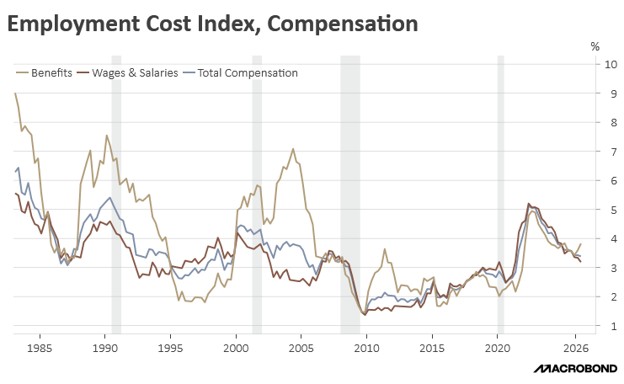
- While the minutes were largely hawkish, a few officials offered a more dovish view of the economy. They noted that although financial conditions remained broadly supportive of growth, housing was the exception, with mortgage rates still elevated. Some officials also raised concerns about the labor market, noting that while layoffs have remained low, so has hiring. Others observed that aggregate wage growth was moderate and consistent with inflation returning to 2%.
- September’s meeting minutes revealed that the Fed is clearly leaning more hawkish, but that may not be enough to guarantee another rate hike. The latest jobs report, which showed a sharp slowdown in hiring, has weighed on expectations for a hike at the October 27-28 meeting. We continue to believe that further hikes will depend on the incoming data as the Fed works to bring inflation back to its 2% target.
Europe Problems: Several political issues are coming to a head across the Continent. The most notable is a wave of protests in a number of EU member states, with demonstrators pointing to high property prices and the cost and quality of education. The unrest comes as the region contends with mounting concerns over its debt burden and elevated energy prices. That said, Europe’s resilience may be underestimated.
- Protests that began in Spain and France have since spread to Belgium and possibly Austria and have led to arrests as demonstrators press for change. In Spain, the anger centers on private investment and mass tourism, which residents blame for pushing home prices out of reach. Elsewhere in the bloc, the grievance is underinvestment, particularly in higher education, where universities are seen as overcrowded and increasingly expensive.
- These protests come as the region appears headed for a political realignment. Across Europe, voters are shifting away from establishment candidates and toward populist (and most recently right-wing) alternatives. Support is rising for Vox in Spain, the National Rally in France, Vlaams Belang in Belgium, and the AfD in Germany. The trend points to growing demand for policies that prioritize domestic interests, such as higher public spending and tighter immigration controls.
- The rising popularity of populists is likely less of a bad omen than markets are pricing in. Although populists have long been viewed as risky for investors, many populist governments have proven less damaging to public finances than feared. Portugal, Spain, and Italy, for example, all have populist governments, yet each is expected to see its debt-to-GDP ratio fall over the next five years.
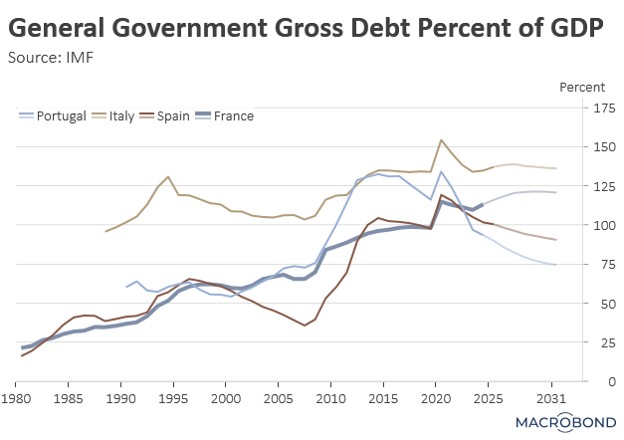
- Rising discontent and higher energy prices should be a short-term headwind for the euro area, but opportunities remain. Even during this period of rising inflation and tighter monetary policy, the eurozone has remained resilient, which suggests the economy still rests on solid foundations. Investors therefore should not be deterred by the civil unrest, as it is unlikely to undermine the long-term viability of companies operating in the region.
Russian Shipments: Oil product exports from Russia have begun to rise even amid the conflict and government restrictions. These foreign sales have emerged as the country seeks to prevent overstocking now that domestic supplies have stabilized. Previously, the country had limited sales of oil products abroad after Ukrainian attacks on its refineries curbed production. The sales suggest Russia may have enough to satisfy domestic demand.
Broadening Conflict: The US appears to be preparing to increase pressure on Iran, while Saudi Arabia faces further attacks. The Pentagon has begun laying the groundwork for additional strikes on Iran, which could occur before the midterms. Meanwhile, Saudi Arabia has faced an attack on one of its airports by Houthi forces. The conflict in the Middle East appears to be spreading and may add to the pressure on energy.
Chip Shrug: Investors appear to be less impressed by earnings from chipmakers. Samsung reported a ninefold rise in operating profit, yet the result still fell short of investor expectations for a higher increase. Additionally, TSMC’s 51% jump in revenue failed to excite investors, who had hoped for more. The muted share-price reaction comes at a time when investors appear to be more worried about the future of the investment boom.