


Daily Comment (October 5, 2026)
by Patrick Fearon-Hernandez, CFA, and Thomas Wash
[Posted: 9:30 AM ET] | PDF
Our Comment today opens with a new release of crude oil reserves by the top industrialized countries. Of course, the move is geared toward trying to bring down energy prices as reports suggest the recent rebound in oil shipping through the Strait of Hormuz may be going in reverse. We next review several other international and US developments that could affect the financial markets today, including an unexpectedly strong performance by the main right-wing candidate in Brazil’s first-round presidential election yesterday and another big spending vow in the US.
Global Petroleum Markets: The Group of 7 (G7) leading industrialized countries on Friday agreed to release 100 million barrels of crude oil and diesel fuel from their strategic reserves to combat the surge in energy prices due to the US-Israeli war against Iran. The release is set to take place over four months, starting immediately, including a substantial diesel release frontloaded within the first 20 days. It’s not clear how much the new release might help bring down prices, but the US allies’ acquiescence to the plan could cut the risk of a US ban on diesel exports.
- Separately, reports over the weekend say Iran has again found a way to attack oil tankers trying to pass through the Strait of Hormuz, striking at least seven vessels over the last week.
- While the US Navy and allied governments in the region had been able to largely shut down Iran’s attacks and boost oil shipments last month, the new attacks could well disrupt global energy supplies again and push oil prices higher. As of this morning, however, oil prices are little changed on the day, with near Brent crude futures trading at $102.68 per barrel.
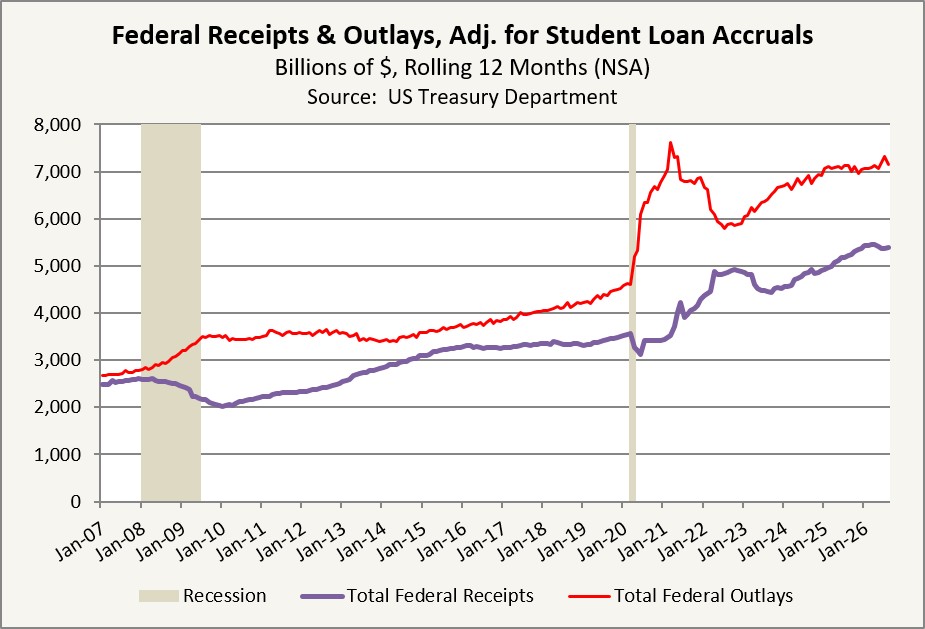
US Politics: President Trump said in a social media post late Friday night that his administration will begin sending out $90 checks to nearly 20 million Medicare participants to help them pay for their Part B premiums. The checks, or direct deposits, could arrive as early as this week. The promise follows an earlier move to pay $500 to about 1 million Obamacare users for “overcharges” and a vow to pay $5,000 to every adult citizen if the Republicans retain control of both the House and the Senate in the midterm elections.
- With the federal budget deficit already widening dangerously due to ramped up spending and tax cuts, the cash payments could significantly worsen the situation if they are all implemented.
- The cash payments are likely aimed at winning votes for Republicans in the midterm elections, although the bulk of the opinion polling today still points to the Democrats taking control of at least the House.
US Artificial Intelligence Industry: After OpenAI late last week notified more than 100 organizations that its AI agents had accessed their systems during pre-deployment testing, analysts over the weekend began to focus more heavily on the legal risks the firm faces because of the intrusions. As we have noted before, popular perceptions that AI is dangerous and uncontrollable could be one factor that takes the wind out of the current AI investment frenzy. Associated legal risks could also undermine investor faith in the leading AI companies.
- We have also identified other elements of the evolving AI landscape that could put the AI frenzy into reverse.
- These other issues include the strong competitive threat from Chinese open-source models and domestic US pushback against the data-center construction needed to run AI.
US Insurance Industry: According to the Wall Street Journal today, Sens. Elizabeth Warren (D-MA) and Josh Hawley (R-MO) have asked six of the biggest property insurers for data and explanations related to customers’ increasing risk of receiving no payment at all. The request follows an investigation by the newspaper earlier this year that showed insurers are refusing to pay anything on a rising share of claims. The senators’ move could potentially lead to tighter regulation, increasing costs, and lower profits for the industry.
Russia-Ukraine War: Planning documents show the Kremlin will boost its 2027 military budget to the equivalent of $205 billion, up approximately 40% from 2026 and almost 400% higher than in 2021, the year before it launched its war against Ukraine. The plans foresee only a slight reduction in spending in 2028. Taken together, the figures suggest President Putin intends to double down on his attack and sustain it for the long term if necessary. In turn, that will keep alive the risks to European security and global fuel supplies.
Russia: The White House has announced it is monitoring reports of an accident at an anti-plague research facility in Siberia in which a researcher reportedly contracted the disease and died. Russian officials subsequently imposed quarantines on several research facilities in the region. Given the enormous social and economic costs of the coronavirus pandemic, any sign that the plague has gotten out of control and is spreading would likely rattle financial markets, at least in Russia and potentially globally.
China-Vietnam: New satellite imagery shows China is making substantial progress on a military runway it’s building on the disputed Antelope Reef in the Paracel Islands. The reef is also claimed by Vietnam, which has lodged diplomatic complaints over the airfield construction. China’s continued territorial aggression in the South China Sea is added evidence that Beijing is taking advantage of the “constructive strategic stability” that President Trump and General Secretary Xi agreed to in May to keep advancing its geopolitical strength.
France: High school students across the country have staged mass demonstrations and riots in recent days to protest overcrowded facilities, crumbling infrastructure, and under-investment in education. The protests have led to some 3,000 arrests and resulted in dozens of schools being set ablaze. Importantly, top officials and far-right leaders have said there is evidence that the protests were instigated by hard-left firebrand Jean-Luc Mélenchon. If that is the case, it could weaken Mélenchon’s party in next year’s national election and ensure a centrist-far right contest.
Spain: Socialist Prime Minister Sánchez, who has led a left-wing minority government since 2023, today called snap parliamentary elections on November 29 to capitalize on popular anger over high housing prices and the right-wing opposition’s success last week in blocking legislation to address the problem. However, the decision is a major gamble, as right-wing parties are currently leading opinion polls in large part because of a popular perception that the prime minister’s immigration policies are too lax.
Brazil: In the first round of Brazil’s presidential election yesterday, preliminary reports show right-wing Sen. Flávio Bolsonaro came in first with 47.3% of the vote, short of the 50.0% needed for an outright victory but ahead of incumbent left-wing President Luiz Inácio Lula da Silva. That sets up a runoff between the two on October 25. If Bolsonaro wins that election as well, he would likely bring Brazil’s foreign and domestic policies much more in line with those of the US administration, which could boost Brazilian stock prices.