


Daily Comment (November 11, 2026)
by Patrick Fearon-Hernandez, CFA, and Thomas Wash
[Posted: 9:30 AM ET] | PDF
Today’s Comment opens with our perspective on how the recent inflation report could influence the upcoming December FOMC meeting. We then turn to AI, outlining why its momentum is far from over. Next, we briefly cover resistance to the bipartisan permitting bill, Brazil’s new budget proposal to Congress, and the shifting dynamics of the House minority. As always, we conclude with a round-up of key domestic and international economic data.
December Hike? Federal Reserve hawks just gained more ammunition to raise rates in December. October’s hotter-than-expected CPI print further cements market sentiment that a final rate hike for the year is almost guaranteed. This shift follows a wave of hawkish remarks from Fed officials determined to bring inflation under control. While tighter policy will likely drive yields higher in the short term, it could set the stage for an upside in bond prices further down the road.
- In October, headline CPI rose 0.4% month-over-month, while core CPI increased 0.3%. Although both figures topped consensus estimates of 0.3% and 0.2%, respectively, they were not significantly worse than September’s prints (which showed a 0.6% rise in headline and 0.3% in core). Official annual figures were not published due to last year’s government shutdown; however, estimates suggest year-over-year headline inflation accelerated from 3.7% to 3.9%, with core advancing from 2.6% to 2.8%.
- Accelerating inflation has amplified market fears that the Federal Reserve could raise interest rates next month. On Tuesday, two Fed officials hinted at a potentially larger hike to tame inflation. Dallas Fed President Lorie Logan suggested the central bank may need at least two more 25-basis-point increases to regain control over price pressures, while Fed Governor Christopher Waller signaled he could push for a 50-basis-point hike at the upcoming meeting.
- Rising market anxiety could lead to a hawkish shift in policy, but it is unlikely to trigger the aggressive tightening seen in 2022–2023. The primary difference this time around is that inflationary pressures are not building at the same pace. As the chart below shows, the recent momentum of inflation remains well below 2022 levels. Even the latest reading appears modest compared to the average three-year pre-pandemic increases, with the year-over-year figure primarily driven by an unusually low reading last October.
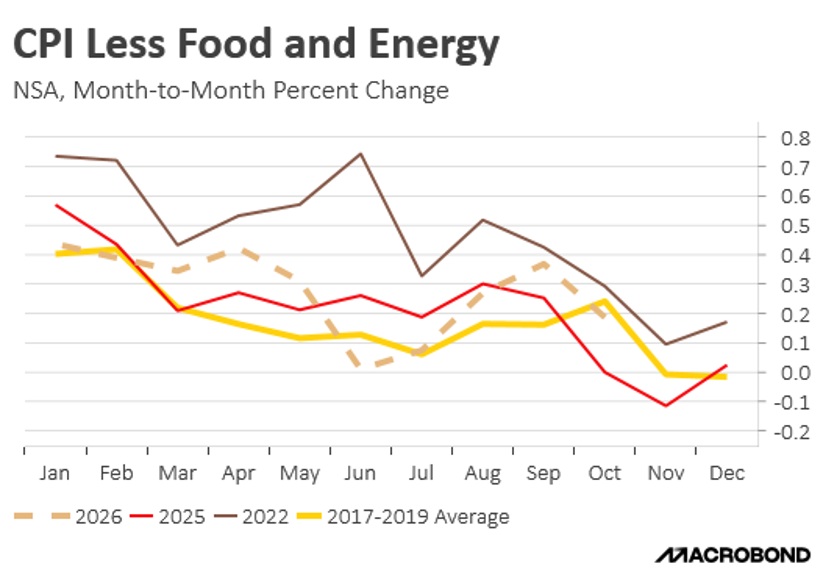
- The recent CPI report paves the way for further rate hikes, though the magnitude will likely remain limited if upcoming reports show modest gains. These hikes should help anchor inflation expectations, which are currently heightened due, in part, to transitory pressures from the conflict in Iran. While the 10-year yield may experience brief upward pressure, it is expected to normalize over time, provided that AI-driven demand pressures ease in the coming months.
AI Trade Returns? In the run-up to Anthropic’s expected IPO, market optimism around artificial intelligence has surged once again. CoreWeave’s latest quarterly earnings beat expectations, delivering strong operational results that helped alleviate growing investor anxiety over its heavy debt load. Financial durability and leverage are likely to remain central themes as markets evaluate how much momentum remains in the multi-year AI trade that has driven broad equity gains and supported economic growth.
- CoreWeave delivered stronger-than-expected third quarter results and raised its full-year guidance. Revenue reached $3.66 billion, ahead of the $3.56 billion consensus, while full-year revenue guidance of $13.0-13.3 billion comfortably topped expectations of $12.9 billion. A quarter-end backlog of $132.5 billion underscored sustained structural demand. Crucially, the strong operating performance helped ease investor concerns over CoreWeave’s reliance on debt markets to fund its capital commitments.
- The focus on CoreWeave comes as the market has grown increasingly concerned about cloud providers’ heavy reliance on debt financing. With interest rates beginning to rise and some projects called into question following the midterm election results, lenders are expected to become more selective in how they allocate capital. Over the past few weeks, many cloud providers have also seen rising costs to insure their debt.
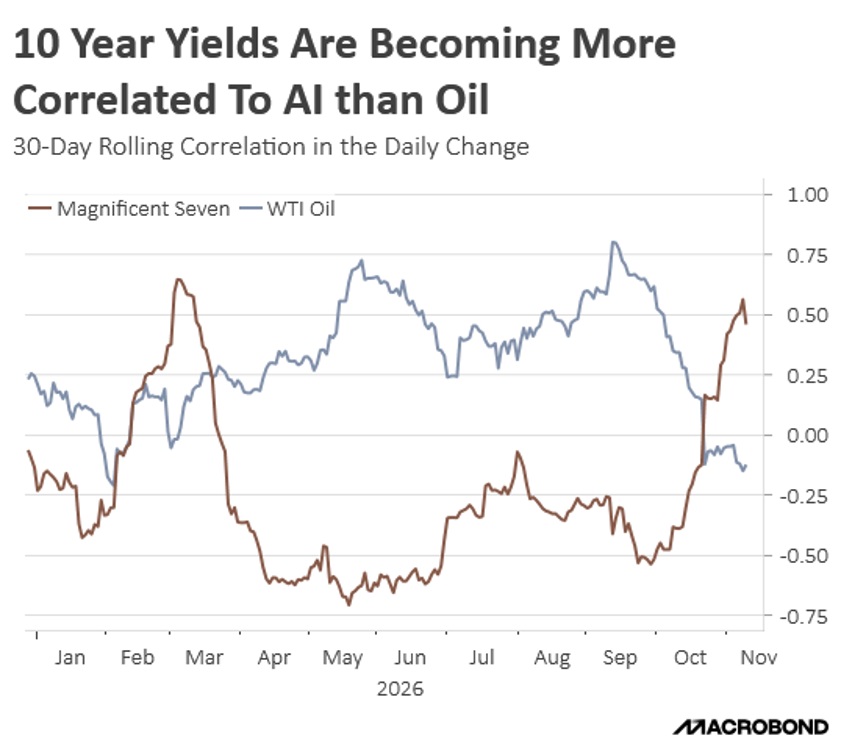
- AI continues to be a major driver of financial markets and the broader economy. The Magnificent 7, widely seen as a barometer of AI, still account for roughly a third of the S&P 500. Meanwhile, the correlation between changes in big tech’s market capitalization and the 10-year Treasury yield has risen over recent weeks and now matters more than oil. At the same time, AI-related spending has been the largest contributor to investment growth and imports.
- Going into next year, the AI trade is likely to remain a major theme for markets. Much of the focus will be on its sustainability, given rising headwinds from interest rates and growing political pushback. While the AI trade may still have some momentum in 2027, sentiment is likely to become increasingly fragile. Given these risks, investors might look to broaden their exposure to avoid being caught off guard if the trade reverses.
Permitting Pause: Bipartisan efforts to trim red tape for data center construction face new friction after President Trump opposed clean energy provisions in the proposed legislation. His pushback against language favoring wind farm development is likely to erode Democratic votes, threatening to push final passage of the bill into 2027. Even with legislative delays, the broader momentum toward deregulation offers potential relief to investors worried about a slowdown in the AI buildout.
Brazil Fiscal Agenda: President Luiz Inácio Lula da Silva will attempt to calm markets with a new budget to be submitted to Congress. Markets have grown increasingly concerned about Brazil’s debt situation following Lula’s reelection last month. The budget is expected to include spending restraints that would kick in if fiscal targets are missed and would also strengthen a provision preventing increased spending on social programs in the event of a revenue windfall. A credible push to address the country’s debt should improve the appeal of Brazilian assets.
New Minority Leader: House Republicans have selected Jim Jordan (R-OH) as their new leader following the resignation of Mike Johnson (R-LA) in the wake of disappointing midterm election results. Jordan’s selection marks a strategic effort by the party to reposition itself, counter Democratic gains in the House, and advance the president’s legislative agenda. Viewed as a major victory for the party’s populist wing, his leadership signals a firm alignment with the president’s “Make America Great Again” (MAGA) platform.