


Daily Comment (May 13, 2026)
by Patrick Fearon-Hernandez, CFA, and Thomas Wash
[Posted: 9:30 AM ET] | PDF
Our Comment opens with our assessment of the latest CPI report and its implications for Fed policy. We then turn to AI, focusing on mounting concerns over the cybersecurity risks associated with these tools. Next, we briefly address Jamie Dimon’s call for closer US‑EU ties, the delegation of business leaders accompanying the Trump administration on its trip to China, and a potential leadership challenge in the UK. As always, we conclude with an overview of recent domestic and international economic data.
CPI Inflation: The April CPI report suggests that the war in Iran is now feeding directly into household costs, making it harder for the Federal Reserve to justify rate cuts this year. Headline inflation rose 3.8% year-over-year in April, the highest reading since 2023, while core CPI increased 2.8%, signaling that price pressures are no longer confined to energy alone. That rebound in inflation weakens the case for looser monetary policy and adds to the challenge facing a more divided Fed.
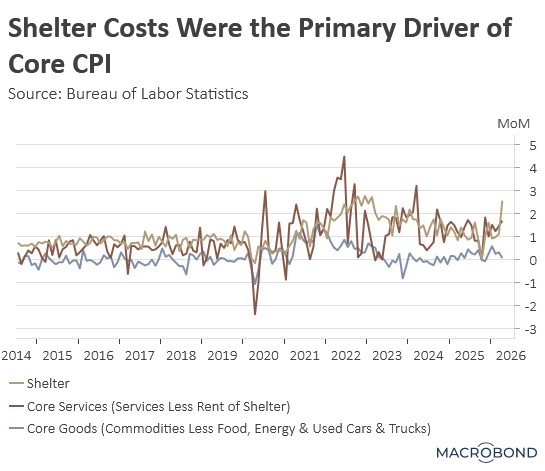
- While inflation did rise, the pickup still appears relatively narrow, particularly on the goods side. Although fuel oil prices eased from the prior month, they remained elevated, rising 5.8% in April after a 30.7% jump in March. Excluding the more volatile categories of food and energy, commodity prices were little changed, while services inflation was concentrated in higher shelter costs, with most other services categories remaining relatively contained.
- The recent increase in inflation is likely to complicate efforts by incoming Fed Chair Kevin Warsh to justify rate cuts. While he has repeatedly emphasized his commitment to the Fed’s price‑stability mandate, he has also questioned the wisdom of maintaining restrictive policy in the face of supply‑driven inflation. In addition, he has argued that monetary policy should support the development of AI, where appropriate, given its potential to lower inflation over time by boosting productivity.
- Warsh’s position is likely to widen divisions within the FOMC, where many officials remain wary of recalibrating policy in response to supply-side shocks. Several policymakers have recently argued that the Fed should abandon any residual easing bias, while some stress that rate hikes can no longer be ruled out. More broadly, those concerns have pushed much of the committee away from its earlier tilt to cuts and toward a more neutral stance that keeps all policy options open.
- The rise in inflation is likely to spur more intense debate among Fed officials over the appropriate policy path. While Warsh appears to welcome this confrontation, inviting colleagues to make their case for where rates should be set, markets may be less receptive, given expectations that he will be less transparent than his predecessor. In our view, the combination of higher inflation and greater internal disagreement over Fed policy could lead to increased volatility in the bond market, especially for longer‑duration Treasurys.
AI Risks: Fears over the cybersecurity risks posed by AI tools are mounting as lawmakers and companies confront the broader economic implications. Anthropic is set to brief the House Committee on Homeland Security on the dangers linked to its latest model, Mythos, which has reportedly exposed security flaws and breached cybersecurity systems. Growing scrutiny of Mythos is prompting Washington to reconsider both its regulatory approach and its foreign policy, given the likelihood that advanced AI tools will play a central role in future cyberwarfare.
- The closed-door meeting is scheduled for Wednesday and is expected to focus on national security risks, as well as potential safeguards. This marks the second time in two weeks that Anthropic has been called to testify before Congress, underscoring the growing urgency among lawmakers to contain emerging AI-related risks. Adding to these concerns, Alphabet noted this week that hackers may have already begun developing their own AI tools to enhance the sophistication and scale of cyberattacks.
- The White House is also planning talks with China to address AI safety risks as both countries race to develop advanced capabilities. Officials say the discussions will aim to manage competition and lower the risk that AI technologies could be weaponized against either side. The goal is to establish open channels of communication to reduce the chance of miscalculation or retaliation if AI systems are used to cause harm.
- Concerns about AI safety and distrust over how rival states might use these tools have highlighted the risk that lawmakers could move to slow adoption. Although no laws have been passed yet, the rising number of hearings suggests legislators may consider measures to limit AI systems that pose national security threats. Companies developing these models could also face pressure to restrict sales and access to prevent state actors from acquiring tools that might be used to harm the country.
- While the tech sector still has significant momentum, we continue to advise investors to maintain a more balanced portfolio. The potential safety risks of AI could lead to increased regulatory scrutiny, which may weigh on the earnings of companies that are already trading at high valuations. We continue to favor some exposure to value stocks, as these companies should be able to outperform growth stocks when doubts emerge around technology.
Jamie’s EU Push: JP Morgan CEO Jamie Dimon has called for the US to forge closer ties with the EU. In a recent interview with Bloomberg, he argued that Washington and Brussels should resolve their disputes in ways that leave both sides stronger. His remarks reflect a broader view that the EU needs to modernize its regulatory framework to create a more supportive business environment. We suspect this perspective is part of a wider trend among global investors who are positioning their portfolios to increase exposure to Europe if US‑EU relations improve.
White House and Friends: Several prominent business leaders are traveling with the Trump administration to take part in talks between the world’s two largest economies. The discussions are expected to cover not only trade, but also the countries’ deepening technology ties as they work to resolve ongoing disputes. Nvidia’s Jensen Huang, Apple’s Tim Cook, and Tesla’s Elon Musk will join the delegation as they seek to help both sides reach an agreement that avoids any broad disruption to global supply chains.
Labour Party Challenge: Following a poor showing in last week’s local elections, Prime Minister Keir Starmer appears to be bracing for a potential leadership challenge. Health Secretary Wes Streeting is reportedly sounding out colleagues to see if he can secure the backing needed to trigger a confidence vote. At this stage, he is believed to have support from around 40 MPs, well short of the 81 required to initiate the process, but a successful challenge could draw in additional contenders and pave the way for yet another change in UK leadership.