


Daily Comment (March 9, 2026)
by Patrick Fearon-Hernandez, CFA, and Thomas Wash
[Posted: 9:30 AM ET] | PDF
Our Comment today opens with the big weekend surge in global energy prices, which has pushed Brent crude well above $100 per barrel and threatens to push US gasoline prices above $4.00 per gallon in the coming weeks. We next review several other international and US developments with the potential to affect the financial markets today, including growing tensions between the US and Israel over the conduct of the war and promises by the US administration to quickly develop a system to rebate tariffs that the Supreme Court recently invalidated.
US-Israel-Iran: Citing an unnamed administration official, Axios reported over the weekend that the US and Israel are mulling sending special operations forces into Iran at a later stage in the war to seize the country’s stock of enriched uranium and/or to seize its major oil export terminal on Kharg Island. The moves would aim to end Iran’s current nuclear weapons program and allow long-term control over its oil exports and economy.
- The risk is that the small special ops forces could find themselves overwhelmed by Iran’s army and other forces. In that case, the pressure would rise for the US and Israel to commit large-scale “boots on the ground.” In turn, that could create further political headwinds for the administration, raising the possibility of the Democrats taking control of at least one chamber of Congress in the November midterm elections.
- Separately, Iranian clerical leaders over the weekend chose Mojtaba Khamenei, son of the slain previous leader, to be the country’s new supreme leader, defying President Trump’s assertion that the son was not acceptable. The naming of Mojtaba Khamenei as supreme leader is being widely interpreted as a sign that the Iranian leadership will fight to the death rather than capitulate to US and Israeli demands in the war.
- Separately, the Strait of Hormuz remains essentially closed, throttling shipments of oil, gas, fertilizers, and other commodities and driving up prices for those commodities. Earlier today, Brent crude oil jumped by more than 25% to almost $120 per barrel before pulling back to about $105 per barrel at this writing. Natural gas prices have also surged again today, while gold, silver, and copper prices are modestly lower, probably reflecting concerns about stagflation and elevated interest rates.
- While the Trump administration has insisted it will not release oil from the US’s strategic petroleum reserve to hold down prices, the International Energy Agency today is coordinating an emergency meeting of finance ministers from the Group of 7 major nations to discuss a joint release of oil from their reserves. Historically, releases from the SPR in times of crisis have helped push oil prices lower.
United States-Israel: One development that has also helped push up energy prices today and rattled financial markets is that Israel attacked 30 of Iran’s fuel storage facilities over the weekend, going far beyond what US officials expected when Tel Aviv informed them of the impending attacks. The Israeli attack could invite Iran to increase its attacks on oil and gas facilities across the region, potentially sparking long-term supply shortages even if the Strait of Hormuz is reopened quickly. The attacks have also increased US-Israeli political tensions.
US Tariff Policy: Ahead of a late Friday meeting between administration lawyers and the federal judge who struck down most of President Trump’s new tariffs, US Customs and Border Protection official Brandon Lord announced that the government will develop a system for returning $166 billion in tariff payments to around 330,000 importers within 45 days. Lord also vowed that the new system would only require minimal submissions from affected companies.
- If the tariff rebate system is up and running as quickly as promised, it would suggest firms could see a significant influx of cash in the second quarter. Firms could potentially accrue the rebates in the first quarter, raising corporate earnings. In any case, the rebates are likely positive for US stocks.
- Of course, one issue will be the extent to which firms share the rebates with their customers, either by outright refunds or lower prices going forward.
- Finally, it’s important to remember that any rebates paid will have a negative impact on the federal budget deficit and debt levels.
US Housing Policy: Senators working on legislation designed to make housing more affordable have inserted a provision that would prohibit large-scale investors from buying existing single family homes and would require them to sell their newly built rental properties to individuals within seven years of completing them. The industry has begun pushing back fiercely against the idea, and it isn’t clear if it will ultimately be signed into law. Nevertheless, it represents a risk to firms aiming to buy and rent out large numbers of homes.
China-Russia: Beijing’s draft five-year plan for 2026-2030 reportedly includes funds for two pipelines transporting natural gas from Russia, suggesting President Putin’s pet project to strengthen China-Russian economic relations, the Power of Siberia 2, could be on the fast track for construction. The pipeline would likely take years to complete, so it won’t make much difference for today’s energy crisis. However, it would likely cement Russia’s role as a key gas supplier for China for years to come.
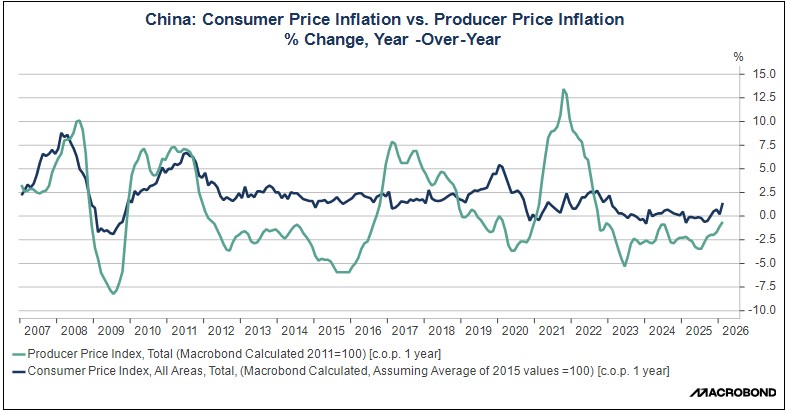
China: The February consumer price index was up 1.3% year-over-year, beating expectations and accelerating from the 0.2% rise in the year to January. According to the national statistics agency, the acceleration was driven by surging oil prices as tensions around Iran heated up and strong demand around the Lunar New Year holidays. Consumer price inflation is now at its highest in more than three years. However, producer prices continue to fall amid excess production.
Germany: In regional elections in the key industrial state of Baden-Württemberg yesterday, the left-wing Greens narrowly came in first with 30.2% of the vote, edging out Chancellor Merz’s Christian Democrats despite opinion polls showing the CDU would win. Just as important, the far-right Alternative for Germany party nearly doubled its vote share to 18.8%. The results point to a further weakening of the country’s traditional centrist parties.