


Daily Comment (September 25, 2026)
by Patrick Fearon-Hernandez, CFA, and Thomas Wash
[Posted: 9:30 AM ET] | PDF
Our Comment opens with our thoughts on renewed speculation regarding potential currency market intervention. We then turn to the energy sector, examining recent calls to rein in high diesel prices. Next, we briefly cover the deployment of additional US troops to Europe, the Fed’s efforts to pave the way for stablecoin issuers, and a sign of cooling tensions between the US and China. As always, we conclude with a review of recent domestic and international economic data.
Yen Value: The Japanese yen is facing upward pressure following comments from Prime Minister Sanae Takaichi. On Friday, Takaichi stated that she discussed the weakness of the yen with President Trump, calling its current valuation against the dollar problematic. Her comments prompted speculation about potential foreign exchange market intervention. The discussion highlights the broader push from the two countries to ensure that speculators do not have a disproportionate impact on the value of the currency.
- Prime Minister Takaichi’s discussion with President Trump took place on the sidelines of the UN General Assembly. During the meeting, the two leaders addressed concerns regarding sharp exchange rate volatility and reaffirmed their commitment to maintaining orderly foreign exchange markets. Their remarks appear to reference joint efforts by the Japanese Ministry of Finance and the US Treasury Department to support the yen in late July following its steep decline in the days leading up to the action.
- The decision to coordinate efforts stems from growing concern over the policy divergence between the two nations’ central banks. Although both institutions raised rates at their latest meetings, the Bank of Japan’s decision was split, whereas the Federal Reserve’s vote was unanimous. This split has driven a rally in the US dollar as investors expect the Fed to remain more committed to rate hikes than its Japanese counterpart.
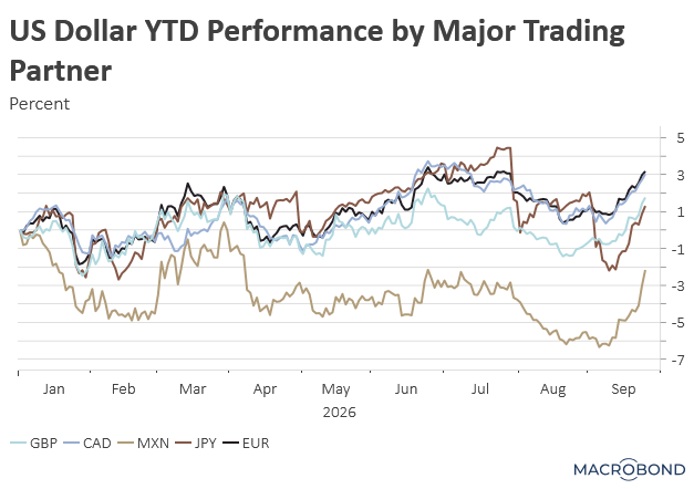
- Following the Federal Reserve’s decision last week, the US dollar strengthened against the currencies of its major trading partners. The rally was driven largely by a distinctly more hawkish shift in the Fed’s dots plot, with an overwhelming majority of FOMC participants signaling support for at least one additional rate increase this year. Fed Chair Kevin Warsh attributed the shift to improving momentum in the US economy, which he said is making it increasingly difficult for the central bank to reach its 2% inflation target.
- Potential intervention in the yen will likely impact the US dollar’s exchange rate, but the effect is expected to be short-lived. While open-market currency purchases may deter speculative trading in the near term, they will not alter the fundamental drivers of monetary policy and growth expectations. Consequently, any coordinated intervention is unlikely to have a lasting impact on the dollar over the long term.
Diesel Problems: The White House is being pressured to put export controls in place to help keep diesel prices down. While the move has been dismissed, it has raised concern among US suppliers as well as foreign buyers of American diesel. The potential controls come as the White House looks to prevent rising fuel prices that would lead to an increase in prices in other parts of the economy.
- Initial reports indicated that the White House was considering export controls lasting up to 90 days. Despite its denial, reports suggest the administration is assessing the potential consequences of imposing the restrictions, particularly during the harvest season. There are concerns that while there may be short-term benefits, it could also have a long-term impact on refiners, as it could lead to oversupply due to a lack of storage, which would slow refining capacity and could worsen the problem for gasoline and jet fuel prices.
- Additionally, there also appears to be pushback from foreign buyers. A ban on American diesel exports could lead to a spike in global prices. The EU has been the most vocal in its opposition as it has relied heavily on US fuel since the war broke out in the Middle East. Canada is also expected to be vulnerable as it also relies heavily on American diesel for its energy needs.
- The rise in fuel costs remains a key issue heading into the autumn season. Farmers who rely on fuel for the machinery used to harvest fall crops have expressed deep concern over soaring input costs. Additionally, there are growing worries that these farms may attempt to compensate for higher expenses by raising crop prices, further fueling inflationary pressures.
- The White House is working hard to contain fuel prices, but it has few good options. So far, the proposal being floated for an export ban seems to lack momentum, which may force the administration to seek alternative measures to rein in diesel prices. If successful, lower fuel costs could help alleviate inflationary pressures driven by high input expenses.
US Troop Expansion: The United States is close to reaching a deal with Poland to establish a military base that would station 10,000 troops, an increase from the 7,000 currently deployed in the country. The move aims to bolster the US presence in Eastern Europe amid growing concerns that Russia could expand its conflict beyond Ukraine. Reports also indicate that Estonia and Lithuania are set to receive additional military deployments.
Stablecoins: The Federal Reserve is moving closer to establishing a regulatory framework for stablecoins. On Thursday, the central bank released a proposal governing the issuance of these asset-backed cryptocurrencies. Under the plan, stablecoin issuers would be required to back all circulating tokens with high-quality reserve assets, such as short-term US Treasurys and cash equivalents. The framework would also set capital requirements and outline an application process for institutions seeking to issue digital assets.
Panda Diplomacy: China has announced plans to send two pandas to Zoo Atlanta. China typically loans these animals as a gesture of goodwill to ease bilateral tensions. The move signals that China and the US are adopting a softer stance as they collaborate on trade and artificial intelligence. While this does not ensure an imminent agreement, it suggests that the pathway toward a deal is becoming clearer.