


Daily Comment (August 18, 2026)
by Patrick Fearon-Hernandez, CFA, and Thomas Wash
[Posted: 9:30 AM ET] | PDF
Our Comment today opens with an update on the conflict in Iran, where there are new signs of the war expanding. We next review several other international and US developments that could affect the financial markets today, including new evidence that sophisticated US investors increasingly find China to be uninvestable and a discussion of the upward pressures on government bond yields in the US and other developed countries.
United States-Israel-Iran: Reports today say the Iran-allied Houthi rebels in Yemen continue to ramp up their military attacks in the region, including launching missile and drone attacks that shut down the port of Mokha, a key logistics hub for civilian shipping and for anti-Houthi forces operating along the coast of the Bab al-Mandeb Strait. Other reports also said a commercial ship was attacked near the Strait of Hormuz yesterday. The developments are consistent with our view that the Iran war could continue for some time and risks spreading throughout the region.
- Separately, in the latest SpyTalk podcast, a recently retired CIA analyst describes how the large-scale culling of personnel from the intelligence community since early 2025 has left few senior officers with the expertise or prestige to provide effective warning to top government leaders when they are about to launch risky national security initiatives.
- In turn, the relative lack of intelligence community input or pushback likely raises the risk of US leaders making bad national security decisions. Of course, any such decisions could have negative implications for the global economy and financial markets.
- Reflecting the latest fighting in the Middle East, global oil prices rose yesterday, with near Brent crude futures up about 3.5% to almost $92 per barrel, although they have retreated slightly in recent hours.
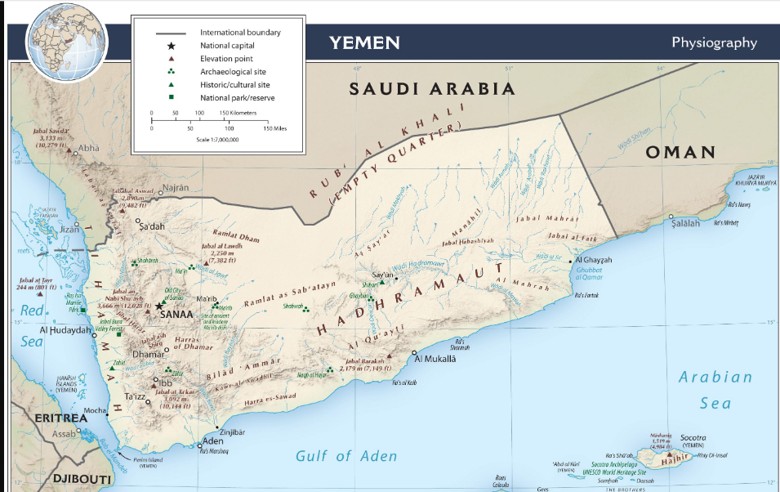
Map of Yemen, with the port of Mokha on its southwest coast. (Source: CIA)
Global Mining Industry: Australian mining giant BHP yesterday said copper was the biggest contributor to its annual profit growth for the first time ever, outstripping the contribution from iron ore and other minerals. In the year to June, the company said copper profits rose about 48%, exceeding the 27% increase in its total earnings before interest, taxes, depreciation, and amortization. The data reflects how global trends such as electrification and artificial intelligence have boosted the demand for copper and supported its price.
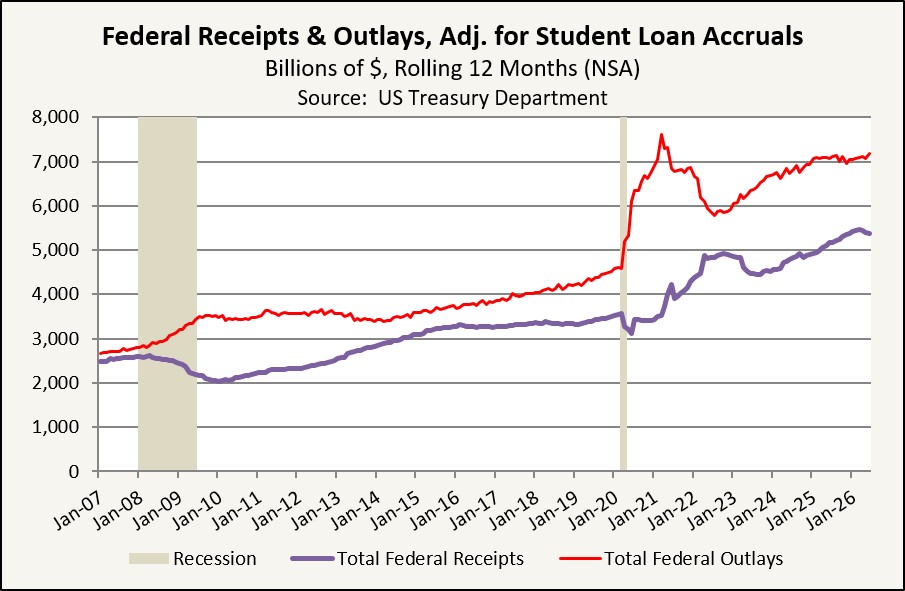
US Bond Market: As oil prices rose yesterday on reports that a tanker had been seized in the Strait of Hormuz, bond prices fell, driving the yield on the 30-year Treasury bond to a 19-year high of 5.31%. The 10-year Treasury yield edged up to 4.725%. In our view, the rise in longer-term bond yields reflects not only concerns about price inflation because of the war in Iran, but also worries about worsening US budget deficits, rising federal debt, and more opaque monetary policymaking under the new Fed chair, Kevin Warsh.
US Artificial Intelligence Industry: AI model developer OpenAI yesterday said it has signed a 20-year lease for a massive new data center to be built in central Ohio, with AI chip developer Nvidia partly guaranteeing the financing. The data center will be built and owned by SoftBank subsidiary SB Energy, in which Nvidia will invest. OpenAI’s reliance on funding from Nvidia, a key supplier, will likely add to investors’ concern about circular financing deals in the AI space, which raises the risk of financial contagion if a major player stumbles.
- Separately, reports yesterday said Google will pay $10 million for a trove of emails, calendar info, chats, documents, spreadsheets, and other business data from the defunct Spirit Airlines, which went out of business earlier this year and whose assets are now being sold off.
- Google is expected to use the data to help train its AI models. The news therefore illustrates how data is rapidly becoming a valuable resource that can command top dollar in auctions.
United States-United Kingdom: Prime Minister Burnham’s cabinet office has reportedly asked the Department for Business, Innovation, Science and Trade to examine how the UK economy would be affected if the US cut it off from frontier AI models launched by companies such as Anthropic and OpenAI. The move reflects fears among other countries that they could be disadvantaged by AI export restrictions such as those the US temporarily imposed for Anthropic’s Fable 5 model in June.
United States-China: New analysis by the Financial Times shows that top private equity firms, including giants such as Blackstone and KKR, have made no new deals in China so far this year. That suggests the full-year total could be even worse than the three deals in 2025 and the two deals in 2026. It also stands in sharp contrast with the dozen investments the firms made in China in 2021. The analysis suggests sophisticated private investors increasingly see China as uninvestable because of issues such as government interference in private firms.
United States-South Korea: President Trump yesterday ordered the Pentagon to scale back its participation in the annual US-South Korea military drills, arguing they are too expensive and provocative toward North Korea. He also appeared to tie the action to Seoul’s resistance to helping the US in its war against Iran. In any case, the move will likely increase the concern among US allies in Asia that they can’t rely on Washington to keep living up to its security commitments.
- As we’ve argued in the past, that could put increased pressure on countries such as Japan and South Korea to eventually develop their own nuclear weapons.
- The development therefore should be supportive of uranium prices over the longer term, given that large amounts of uranium would be needed for new countries to develop their own modern, credible nuclear weapons arsenals.