


Daily Comment (May 12, 2026)
by Patrick Fearon-Hernandez, CFA, and Thomas Wash
[Posted: 9:30 AM ET] | PDF
Our Comment today opens with an update on the war in Iran, where President Trump appears to be increasingly frustrated that the Iranians are not caving to his demands in negotiations. We next review several other international and US developments that could affect the financial markets today, including an increasing risk that British Prime Minister Starmer will be forced to resign and surprising new data showing that major oil companies are starting to explore for oil again in Alaska.
United States-Iran-UAE: In a television interview yesterday, President Trump said the US ceasefire with Iran was on “life support,” which may signal that he is considering a resumption of attacks against Tehran to extract concessions in the ongoing bilateral peace talks. Trump’s statement came as both sides reportedly launched limited attacks on each other yesterday.
- We continue to believe that few investors are pricing in the risk of a new price spike for energy and other commodities as global stockpiles dwindle in response to the continued closure of the Strait of Hormuz. Even fewer investors are probably pricing in the risk that frustration with Iran’s intransigence in the peace talks could prompt the administration to renew its military campaign against Iran much more aggressively than in the war to date.
- Separately, Trump said he supports the idea of temporarily suspending the US gasoline tax of 18.4 cents per gallon to ease soaring fuel costs for motorists. Lawmakers in Congress are already working on the required legislation. However, along with the cost of prosecuting the war, the move would further boost the US budget deficit and could put additional upward pressure on bond yields.
- In another important development, reports say the United Arab Emirates has secretly been launching military attacks on Iran, including a strike on its Lavan oil refinery in the Persian Gulf, to retaliate for Tehran’s large-scale attacks on the UAE. The development provides further evidence that the war could still draw in other nations in the region.
Germany: New polling shows that support for the far-right Alternative for Germany (AfD) has jumped to 27% since the party began criticizing President Trump for his war against Iran. That means the AfD’s support is now stronger than that of the ruling Christian Democratic Party. The news also shows how Europe’s far-right parties are rebuilding support not only by criticizing their national governments and advocating for better economic policies, but also by distancing themselves from the current US administration.
United Kingdom: As we flagged in our Comment yesterday, Prime Minister Starmer tried to rebuild his political support on Monday with a major speech calling for more leftist policies. However, the effort fell flat. More than 80 lawmakers from his own Labour Party have now publicly urged Starmer to set a timetable for his departure, and government ministers have begun to resign. Still, Starmer is refusing to step down.
- Amid the political instability, the yield on the UK’s 10-year government bonds has topped 5.10%, reaching its highest level since 2008. In addition, the pound today has depreciated by about 0.6% to just $1.35. The FTSE 100 stock price index is now down approximately 6.3% from its most recent peak in late February.
- The market reaction suggests investors are becoming more concerned that the political situation will undermine British fiscal discipline and preclude economic reforms needed to reignite economic growth.
Philippines: In a chaotic day of politics yesterday, the lower house of the legislature voted to impeach Vice President Sara Duterte for plotting to assassinate President Marcos, among other charges. However, sensing where the vote was going, Duterte’s party used a parliamentary procedure to seize control of the upper chamber, likely meaning that Duterte will be acquitted or have her trial delayed. The developments underscore the deep political fractures in Manila, which are also hindering needed economic reforms and discouraging investors.
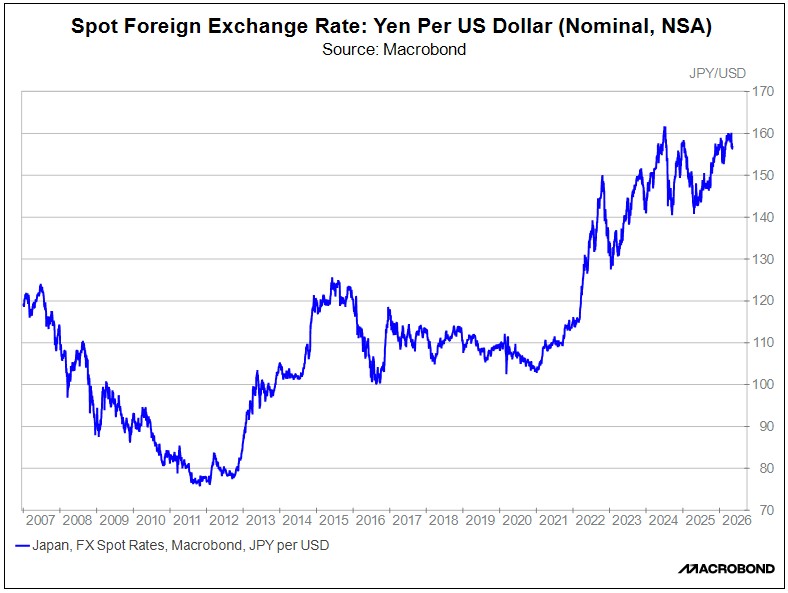
United States-Japan: After a meeting today between US Treasury Secretary Bessent and Japanese Finance Minister Katayama, the Japanese side claimed Bessent had given them his “full understanding” regarding the weak yen. The statement suggests the US administration is satisfied with Tokyo’s recent currency market interventions to keep the yen from weakening further and will not take more aggressive measures to force Japan to boost the yen.
US Politics: After three straight losses in court regarding their redistricting efforts, as we discussed in our Comment yesterday, Democrats have begun mulling new redistricting efforts to pick up additional House seats in states such as New York, Maryland, and Colorado. Of course, it’s getting very close to the November mid-term elections, so it’s not clear that the effort would tip the redistricting battle in the Democrats’ favor, especially since the Republicans can also launch new efforts to squeeze more seats out of other states.
US Monetary Policy: With the success of procedural voting in recent days, a final Senate vote to confirm Kevin Warsh as the new chair of the Federal Reserve could come as early as Wednesday, setting the stage for Warsh to take over the central bank as soon as Chair Powell’s term ends on Friday. However, as noted in a useful Financial Times article today, Warsh is likely to face a fractured policy committee and will need to manage a tough balancing act to cap consumer price inflation while also supporting the economic growth that the White House wants.
US Energy Industry: In a little-noticed development amid the war in Iran and the continuing productivity of the US shale fields, new reports say ExxonMobil, Shell, Repsol, and other major oil producers bid a record $163 million in March to secure drilling leases in Alaska’s National Petroleum Reserve. In addition, ConocoPhillips and Australia’s Santos bid on leases covering more than one million acres on Alaska’s North Slope.
- The reports suggest that major oil companies have begun exploring in Alaska again to replenish reserves, diversify their portfolios, and capitalize on the US administration’s greater support for fossil-fuel development.
- While it is costly to produce oil in Alaska, the investments could end up being lucrative if discoveries are made and global oil prices remain high.