


Daily Comment (March 6, 2026)
by Patrick Fearon-Hernandez, CFA, and Thomas Wash
[Posted: 9:30 AM ET] | PDF
Our Comment opens with our views on how the Middle East conflict is shaping the monetary policy outlook. We then provide a brief overview of other key market developments, including state lawsuits seeking to roll back the latest tariffs, new restrictions on chip exports, normalizing ties between the US and Venezuela, and the escalating dispute between the Pentagon and Anthropic. We also include a summary of recent US and international data releases.
Iran and Monetary Policy: The escalating Middle East conflict is clouding the Federal Reserve’s policy path, introducing fresh uncertainty as it threatens to reignite inflation. Heightened tensions are raising alarms over potential global supply chain disruptions, with Brent crude nearing $90 a barrel and US gasoline prices climbing nearly 30 cents since hostilities began. This renewed price pressure has led to concerns that the Fed could pivot from debating when to cut rates to weighing whether hikes are needed to balance supply and demand.
- Concerns over the potential inflationary impact of the war have already begun to weigh on both the fixed income and currency markets. The 10-year Treasury yield has surged, rising nearly 15 basis points over the last three days to hit a three-week high. Meanwhile, futures markets are rapidly pricing out expectations for rate cuts, with war-induced price pressures now seen as a key factor that could prevent the Federal Reserve from easing policy at all this year.
- The recent market moves highlight concerns that the war could last longer than initially expected and potentially widen its geographic footprint. Azerbaijan has accused Iran of drone attacks on its territory and demanded explanations from Tehran, underscoring the risk of spillover along Iran’s northern border. At the same time, a US submarine strike that sank an Iranian warship off the coast of Sri Lanka has brought the conflict directly into the Indian Ocean, closer to key shipping routes serving India and Sri Lanka.
- The conflict has already raised alarms about supply chain disruptions amid slowing trade flows. The Strait of Hormuz, a critical global shipping chokepoint, has already seen traffic sharply curtailed, raising the risk of broader trade bottlenecks. While energy markets have drawn the most attention, regional instability is also affecting other commodities, with industrial metals such as aluminum increasingly vulnerable to being caught in the crosshairs.
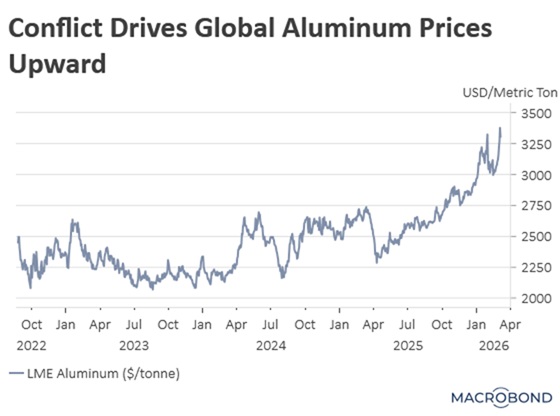
- What the Fed does next will likely hinge on whether the conflict creates a meaningful supply/demand imbalance. If policymakers judge that supply disruptions could trigger a sustained price shock, they may feel compelled to pause rate cuts and even consider another hike. By contrast, if they expect the conflict to be short-lived, with supply normalizing quickly, or if they believe weaker demand will contain inflation without further action, then they may opt to keep policy unchanged.
- The labor market is likely to be another key factor in whether the Federal Reserve shifts its policy stance. After a weak 2025, when employment recorded the slowest non‑recession job growth in more than two decades, hiring now appears to be stabilizing and gradually improving. If that nascent recovery were to fade, Fed officials could feel pressure to lower rates to support job creation.

- In our view, the recent conflict and associated risk of a supply shock have likely reduced the scope for rate cuts this year, given the potential for higher input prices to feed into inflation. That said, we still see the possibility for some easing, assuming the conflict is resolved relatively quickly or the labor market slips back toward the pronounced slowdown seen in 2025.
Tariff Troubles: Several US states are pressing the Trump administration to halt the next round of tariffs following the Supreme Court’s decision to overturn the original measures. The pushback comes as the White House seeks alternative ways to ensure trading partners comply with the terms of its trade agreements. This added friction is likely to deepen uncertainty for businesses, which are struggling to assess whether current or proposed tariffs will ultimately remain in place, potentially leading to a period of strategic inertia.
Chip Restrictions: The US is weighing new rules that would further limit where chipmakers can do business. Under draft regulations from the Commerce Department, exports of certain chips would be restricted to destinations that have not received explicit approval from the White House. Although not yet final, the proposal could effectively curb the sale of most high‑end AI accelerators. The move underscores the government’s growing role in shaping the broader economy.
‘Don’roe Doctrine: The US and Venezuela have officially restored diplomatic ties, highlighting Washington’s renewed focus on Latin America. The move follows the US-backed transition that removed Nicolás Maduro from power earlier this year and signals a desire to draw South America more firmly back into its strategic and economic orbit. In our view, South American countries that deepen ties with the US could benefit from preferential trade access and increased investment flows, making them potentially attractive destinations for long‑term capital.
AI Showdwon: The dispute between Anthropic and the Pentagon has intensified after the US government formally categorized the AI firm’s technology as a supply-chain risk. The designation could restrict Anthropic from future defense collaborations and threatens its existing $200 million Pentagon contract. The conflict stems from disagreements over the company’s willingness to support certain government applications that it believes conflict with its internal ethical guidelines. This standoff could set a precedent for future public-private partnerships.